


Rajarshi Ganguly, The Bengal News, West Bengal, India : As the relentless heat of April settles over the plains of rural Bengal, the air grows thick with the sound of dhak drums and the scent of incense. This is Gajan, the traditional folk festival dedicated to Lord Shiva and his consort, Parvati. While the festival is famous for its intense rituals, it is the kaleidoscopic presence of the Bahurupi – the “performers of many forms” – that brings a surreal, theatrical magic to the village streets.
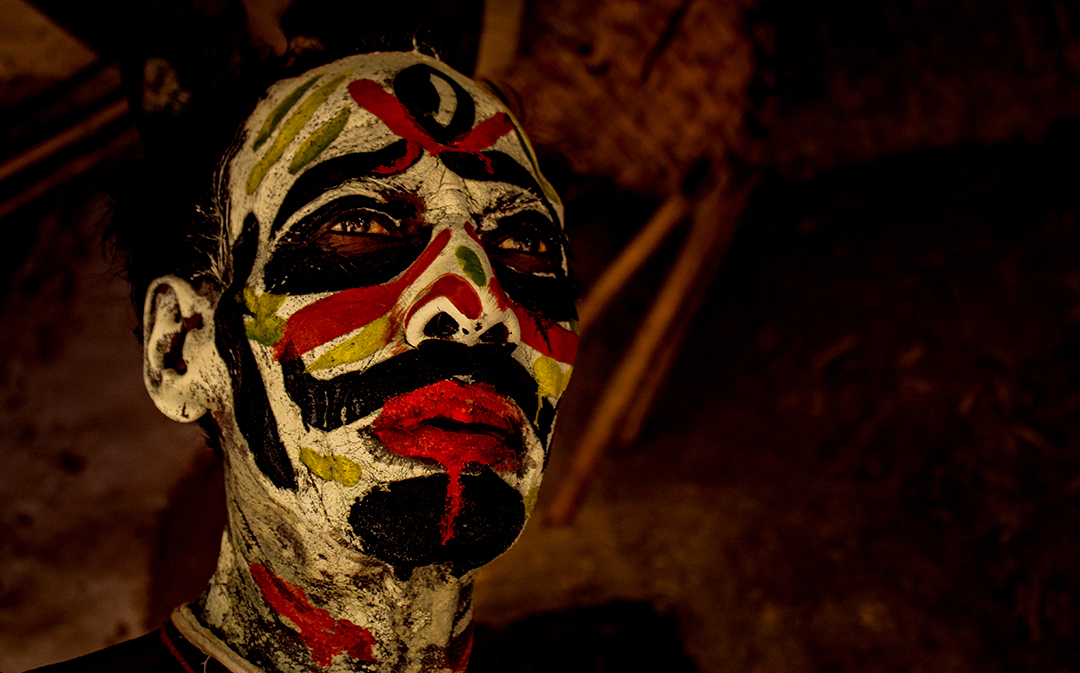 Gajon Sonyashi / Photo : Sudip Chanda
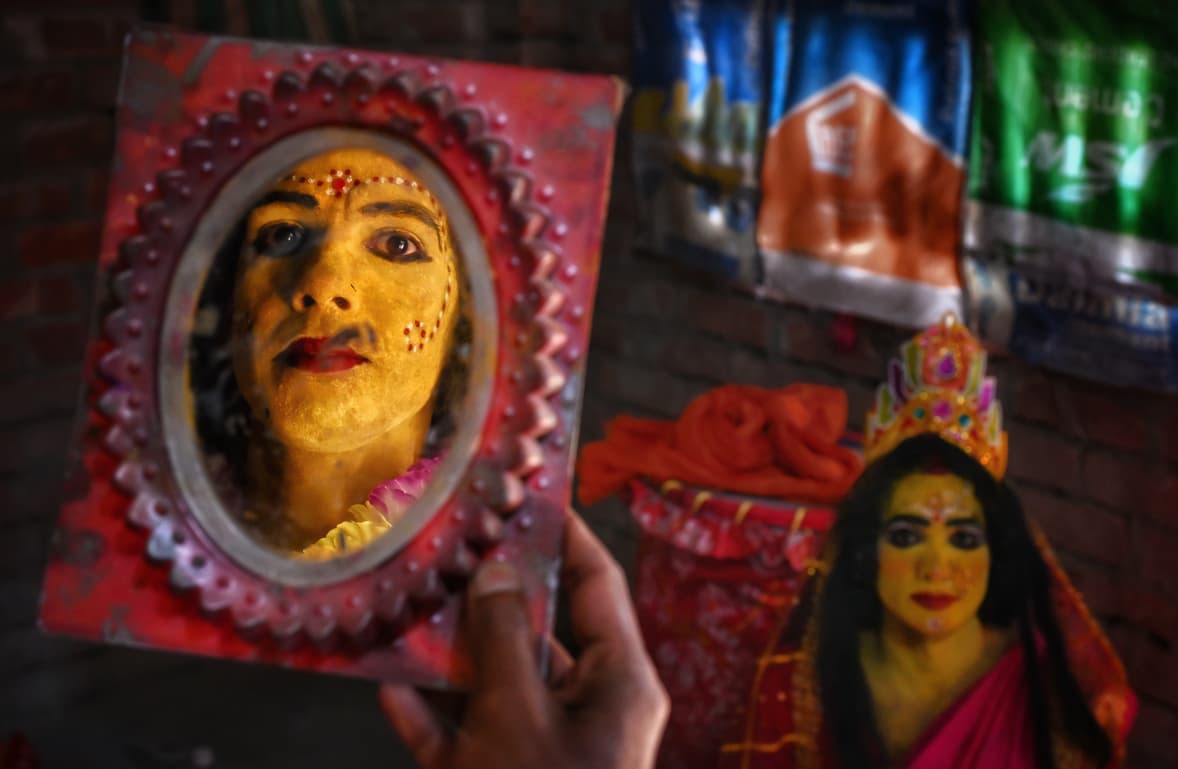
The Bahurupi (derived from the Sanskrit words bahu, meaning many, and rupa, meaning form) is a centuries-old folk art form that is rapidly becoming a rare sight. During the Gajan festival, these performers don elaborate costumes and heavy greasepaint to transform into deities, demons, and social archetypes. Unlike classical dancers, the Bahurupi’s stage is the dusty road, and their audience is anyone they encounter. Their performance is a blend of mime, street theater, and ritualistic dance.
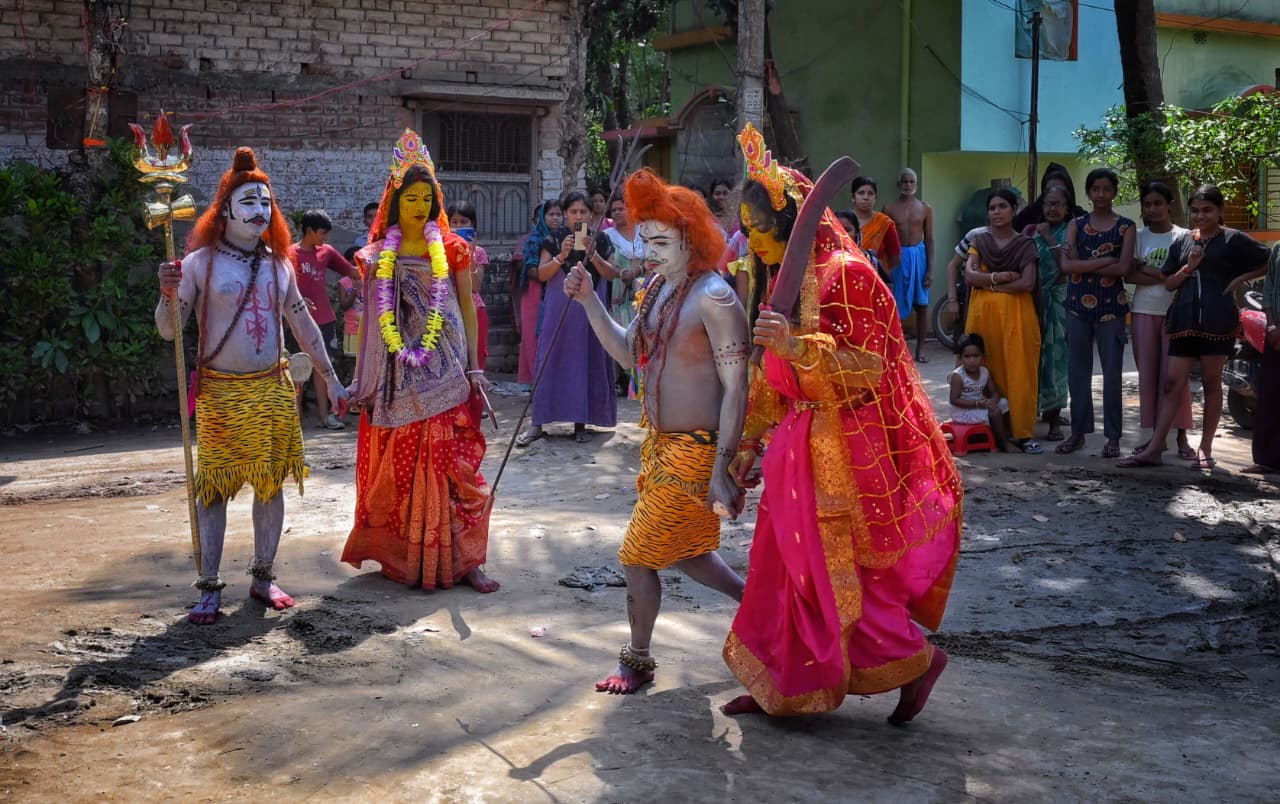 Gajon Sonyashi / Photo : Rajarshi Ganguly
While a Bahurupi can portray almost anything, the Gajan festival sees a specific focus on the divine and the macabre:
- Shiva and Parvati: The most common duo, often seen begging for alms or performing a stylized dance representing the Tandava.
- Kali: Adorned with a garland of skulls and a protruding tongue, this performer invokes both fear and reverence.
- The “Dak” (Ghost/Demon): Characters painted in pitch black or ghostly white, meant to represent the spirits that serve Lord Shiva.
- Social Satire: Occasionally, performers dress as policemen, village elders, or animals to provide comic relief and social commentary.
In the context of Gajan, the Bahurupi performance isn’t just entertainment; it is an act of devotion. Many performers are Gajan Sannyasis (temporary monks) who undergo rigorous fasting and physical penance during the month of Chaitra.
“For these few days, I am not a father or a laborer,” says Subal Dutta, a veteran Bahurupi from Kirnahar. “When the paint goes on, the spirit of the Mahadev (Shiva) enters me. We walk miles in the sun, not feeling the heat, because the dance is our prayer.”
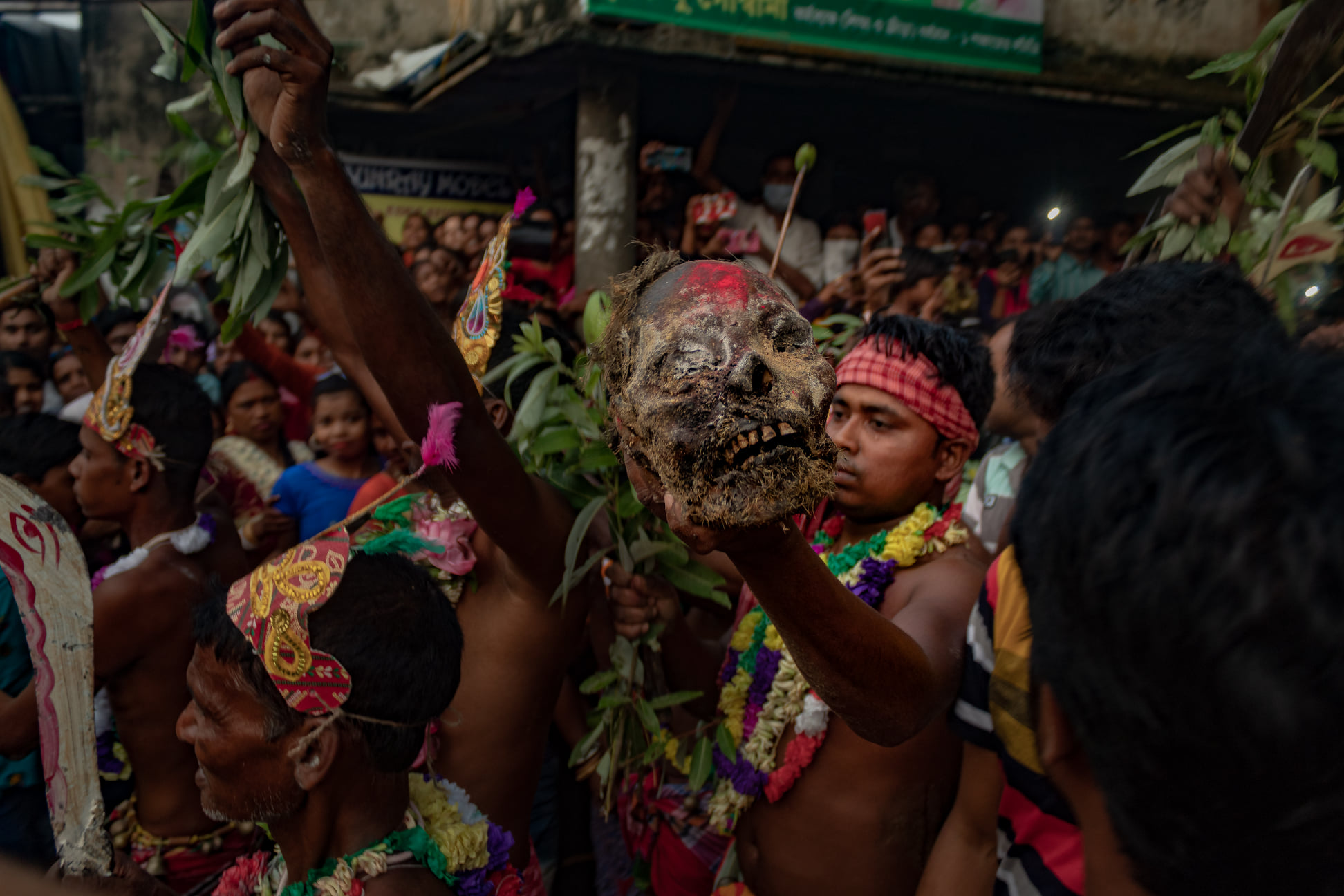 Matha Khela at Bardwan / Photo : Sudip Chanda
As the festival reaches its crescendo during Chaitra Sankranti (the last day of the Bengali calendar), the atmosphere shifts from theatrical to visceral. This is when the Sannyasis (devotees) perform the Matha Khela or “Skull Dance.” “It is not about fear; it is about the surrender of the ego,” says a local devotee from a village near Bolpur. “When we hold the remains, we remind the world that life is fleeting and Shiva is the master of the cremation ground.”
The ritual involves devotees dancing rhythmically while holding human skulls, often exhumed specifically for the ritual or kept as sacred relics within the shrine.
- The Ritual Path: Surrounded by clouds of incense and the rhythmic chanting of “Gajan Baba-r Chon-e, Mahadeb!”, the dancers whirl in a trance-like state.
- Symbolism: The act represents the triumph over the fear of death and a deep connection to Shiva in his Rudra (fierce) avatar.
Despite the encroachment of modern entertainment, the Gajan of West Bengal remains a powerhouse of folk identity. In districts like Purulia, Bardhman, Bankura, and Birbhum, the festival continues to draw thousands of spectators who come to witness the thin veil between the human and the divine.
As the sun sets on the Bengali year, the Bahurupi wipes away his paint and the skulls are returned to their resting places. The rituals conclude, leaving behind a community rejuvenated, ready to face the monsoon and the new year with the blessings of the Great Ascetic.


Superb
Thank you