


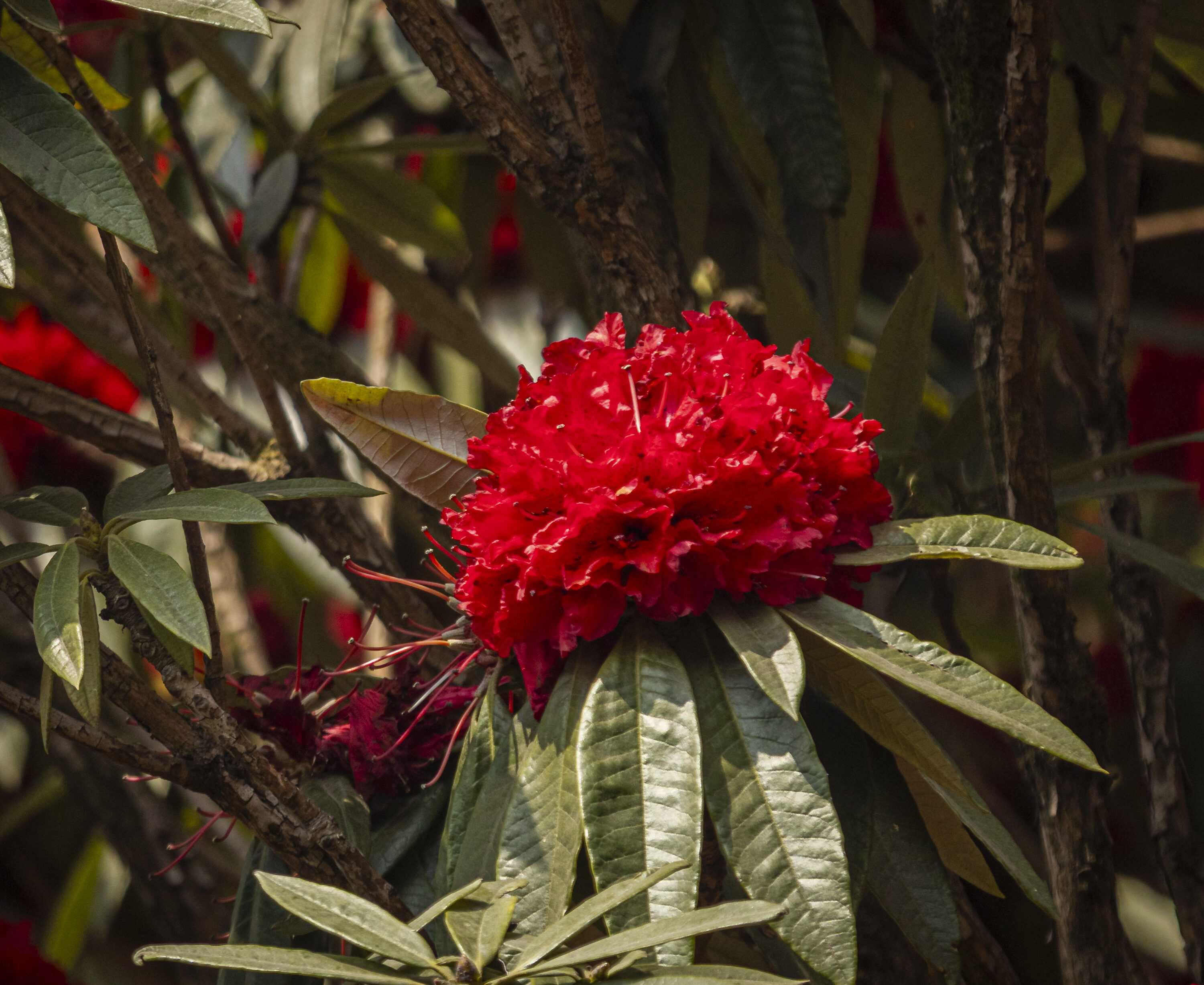
As the winter snows recede across the Himalayan belt, the “Glory of the Spring” has made a vibrant, albeit early, return. The blooming of the Rhododendron arboreum – known locally as Buransh – has transformed the rugged mountain terrain into a sea of crimson, signaling the change of seasons and sparking both celebration and scientific concern.
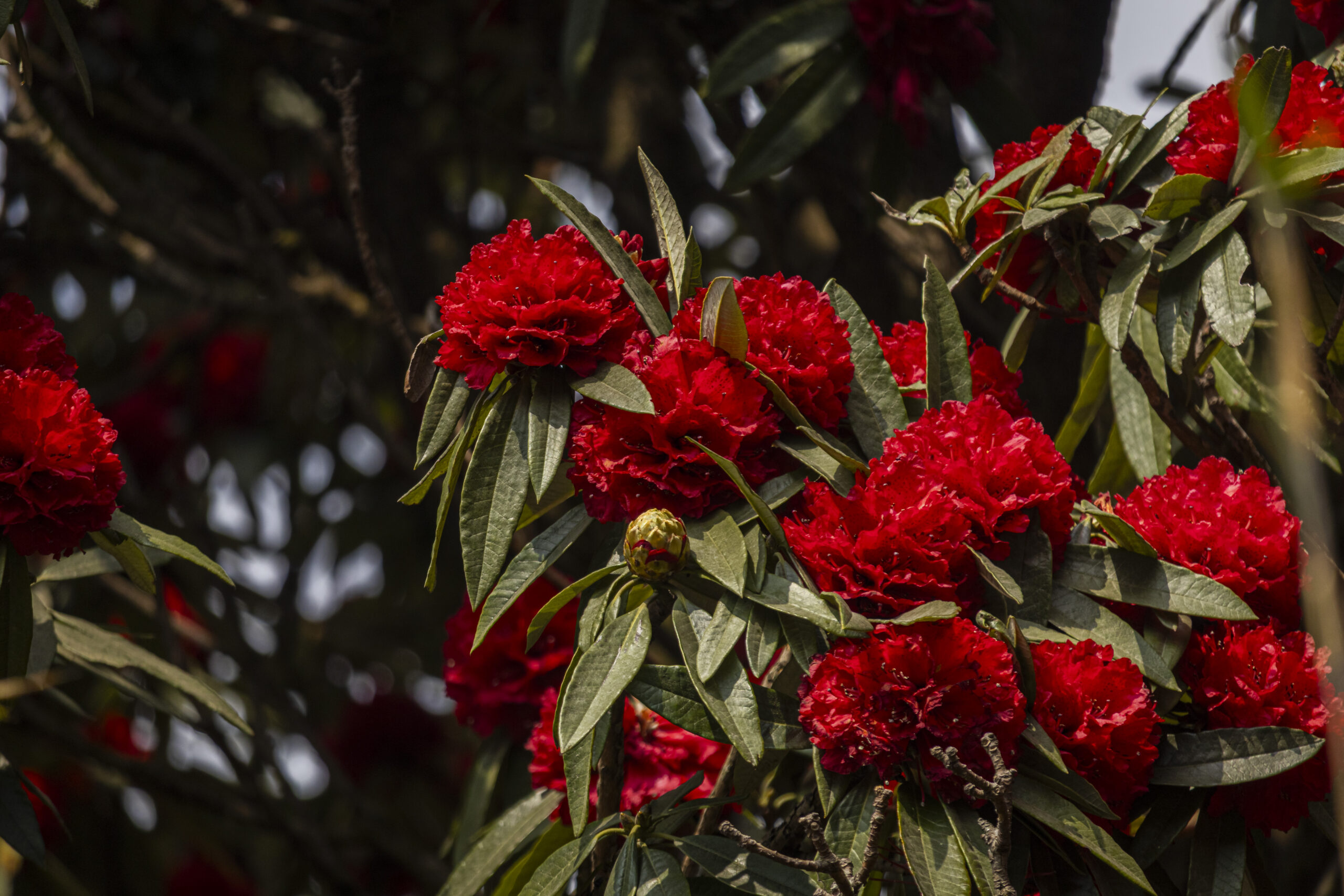 The World’s Tallest “Rose Tree” / Photo : Sudip Chanda
While most people think of rhododendrons as garden shrubs, the species found in the Indo-Pacific region are true giants. In a recent spotlight on the region’s biodiversity, naturalists have drawn attention to the world-record-holding specimen at Mount Japfu in Nagaland. Standing at a staggering 109 feet (33 meters), this tree remains the tallest rhododendron ever recorded by Guinness World Records, proving that these “rose trees” (from the Greek rhodon for rose and dendron for tree) are far more than mere decorative bushes. Across Nepal and the Indian states of Uttarakhand and Sikkim, the rhododendron is more than just a plant; it is a cultural cornerstone.
Economic Hub: In places like Munsyari, the annual Buransh Mahotsav (Rhododendron Festival) attracts thousands of tourists, bolstering local economies through “floral tourism.”
National Symbol: It serves as the national flower of Nepal.
Medicinal & Culinary Use: Local communities harvest the petals to create Buransh juice and chutneys, believed to aid heart health and digestion.
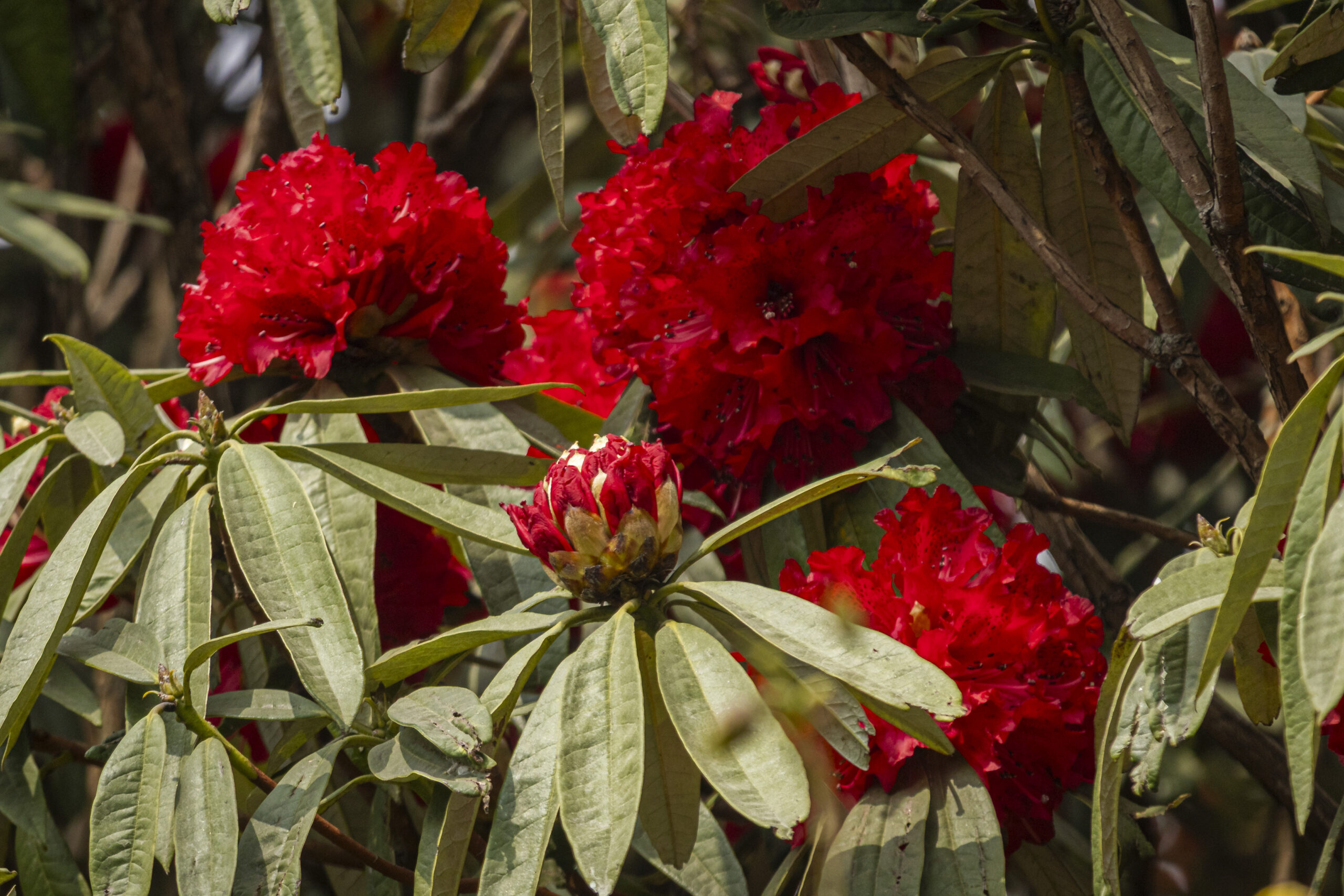 Rododendron Flower / Photo : Sudip Chanda
Environmentalists have noted that the trees are flowering nearly three weeks earlier than they did a decade ago. “The rhododendron is a ‘climate indicator’ species,” says Dr. Suresh Attri, a principal scientist in the Department of Environment. “When we see these blooms appearing in late January or February instead of March, it’s a direct signal of rising temperatures and shifting precipitation patterns in the sub-alpine ecosystem.” This “early spring” creates a phenological mismatch, where the flowers bloom before their natural pollinators – bees and butterflies – have emerged from dormancy, potentially threatening the long-term survival of the species.
With 30 – 40% of the world’s rhododendron species now classified as conservation-dependent by the IUCN, new initiatives are taking root:
- Refugia Mapping: Scientists are identifying “climate refugia” in the Qinling-Daba Mountains and the Eastern Himalayas where these trees might survive future warming.
- Protection Zones: In Sikkim, the Singba Rhododendron Sanctuary has expanded its monitoring programs to protect the 45 unique taxa found in the region.
As the 2026 season continues, the message from the mountains is clear: while the crimson canopy remains a breathtaking sight, its survival depends on a global effort to stabilize the climate that has nurtured these “antiques of the plant kingdom” for millions of years.





Superb