


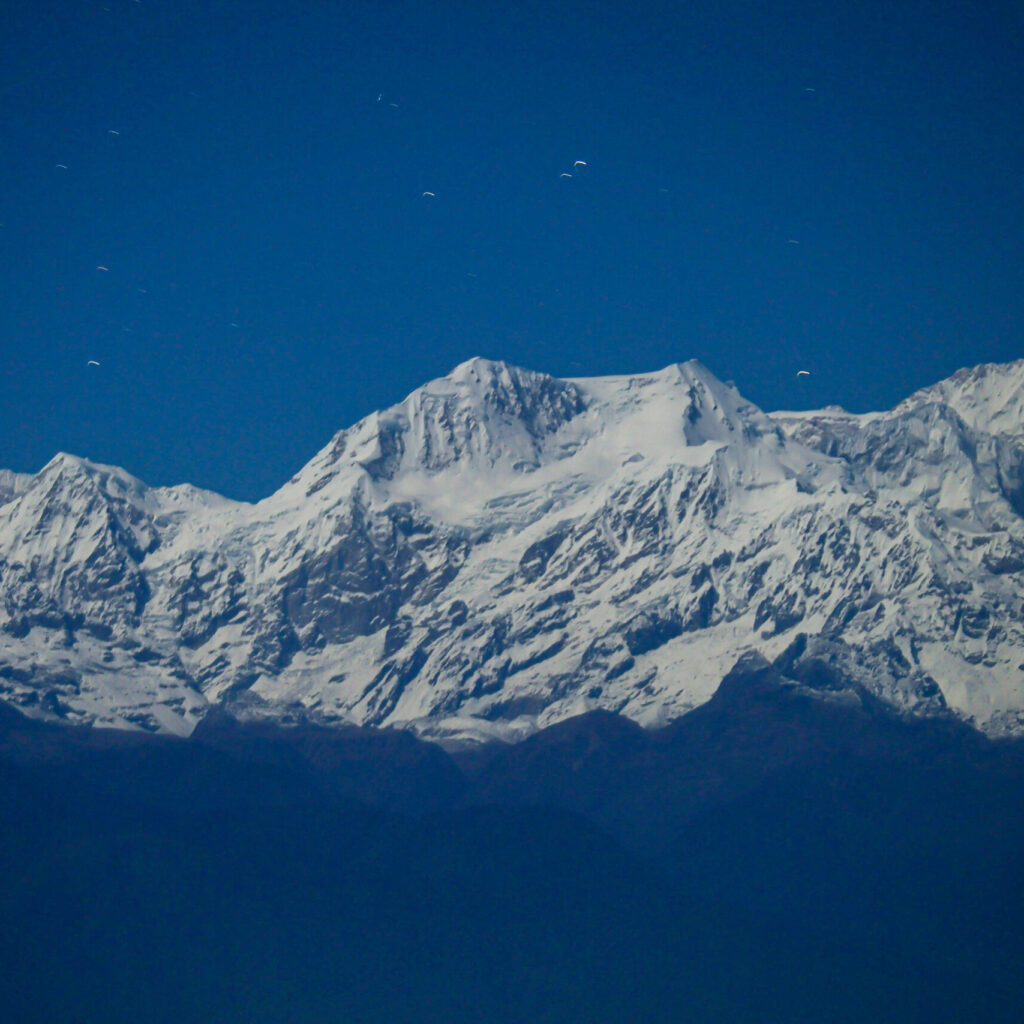
Kanchanjunga, the third-highest peak in the world and revered as the “Five Treasures of the Great Snow,” is most famously known for the spectacular golden and orange hues it catches at sunrise. Yet, a truly rare and profoundly meditative experience awaits those who witness its towering mass bathed in the ethereal glow of the moonlight.
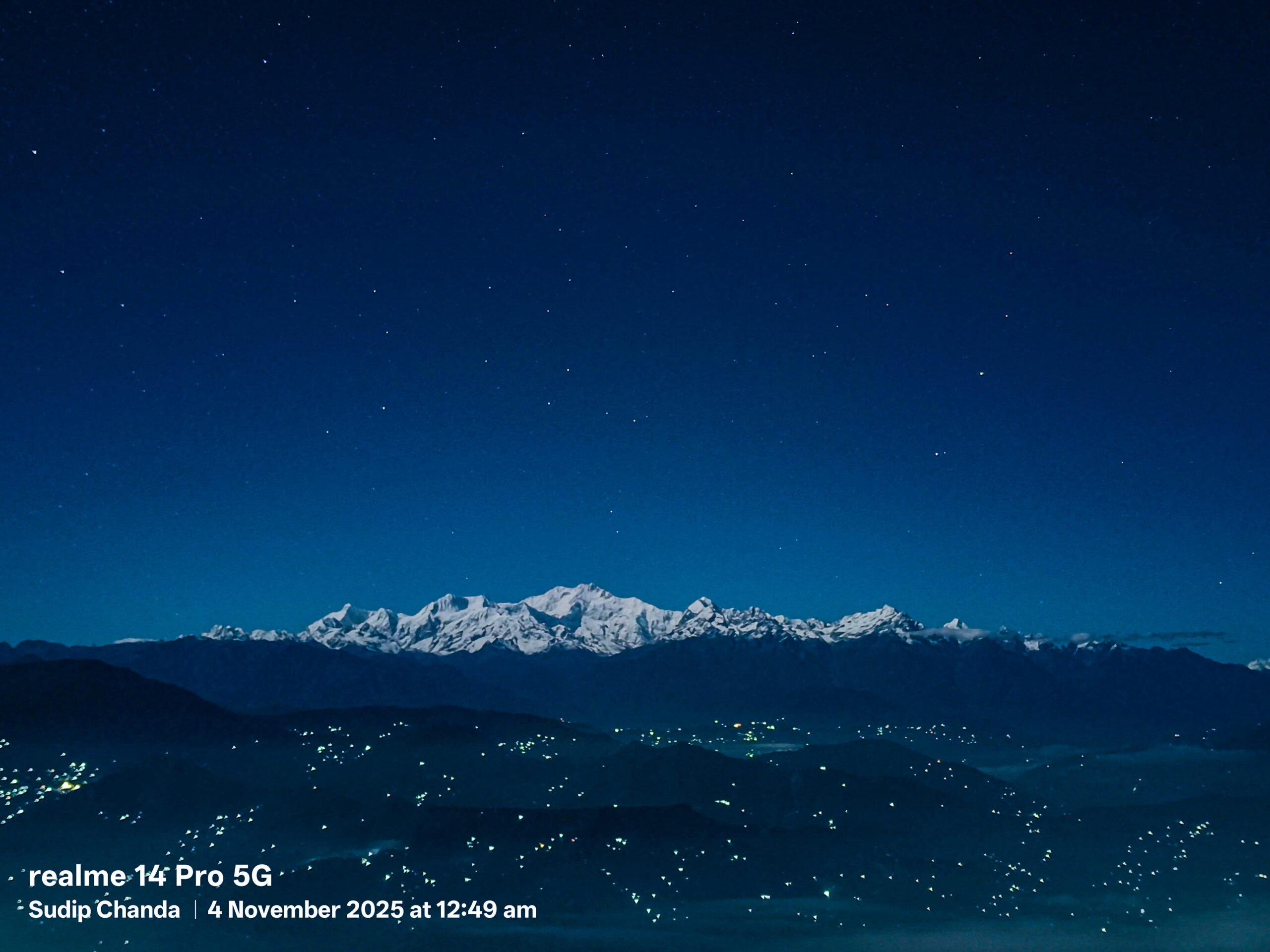 Kanchanjunga in moon light / Photo : Sudip Chanda
This is not a sight of vibrant colour, but of sublime, monochromatic purity—a vision that transforms the great mountain from an earthly giant into a celestial sculpture. As the sun sets and the last pink flush fades, the world below plunges into shadow, but Kanchanjunga’s snowy facade catches the silver light of the moon. This is when the mountain sheds its daytime ruggedness and assumes an almost dreamlike, translucent quality.
The Silver Glow: The snow and ice are not merely white; they become a brilliant, glowing silver, making the five major peaks stand out against the deep indigo of the Himalayan sky. This luminescence is so intense that the mountain appears to generate its own cool light, a silent beacon in the darkness.
Shadow and Depth: The soft, directional light of the moon creates deep, velvet-black shadows in the mountain’s vast crevasses and valleys. This contrast meticulously highlights the scale and texture of the massif, giving its colossal form a powerful, three-dimensional presence. The gentle illumination outlines every ridge and cornice, sketching a stark, architectural marvel against the backdrop of infinity.
The Silent Majesty: Viewing Kanchanjunga by moonlight is an intensely silent experience. The noises of the day—the calls of birds, the hum of life—are replaced by a profound stillness. This quietude amplifies the mountain’s majesty, turning the viewing into a moment of solitary contemplation. The mountain feels closer to the stars than to the ground beneath your feet.
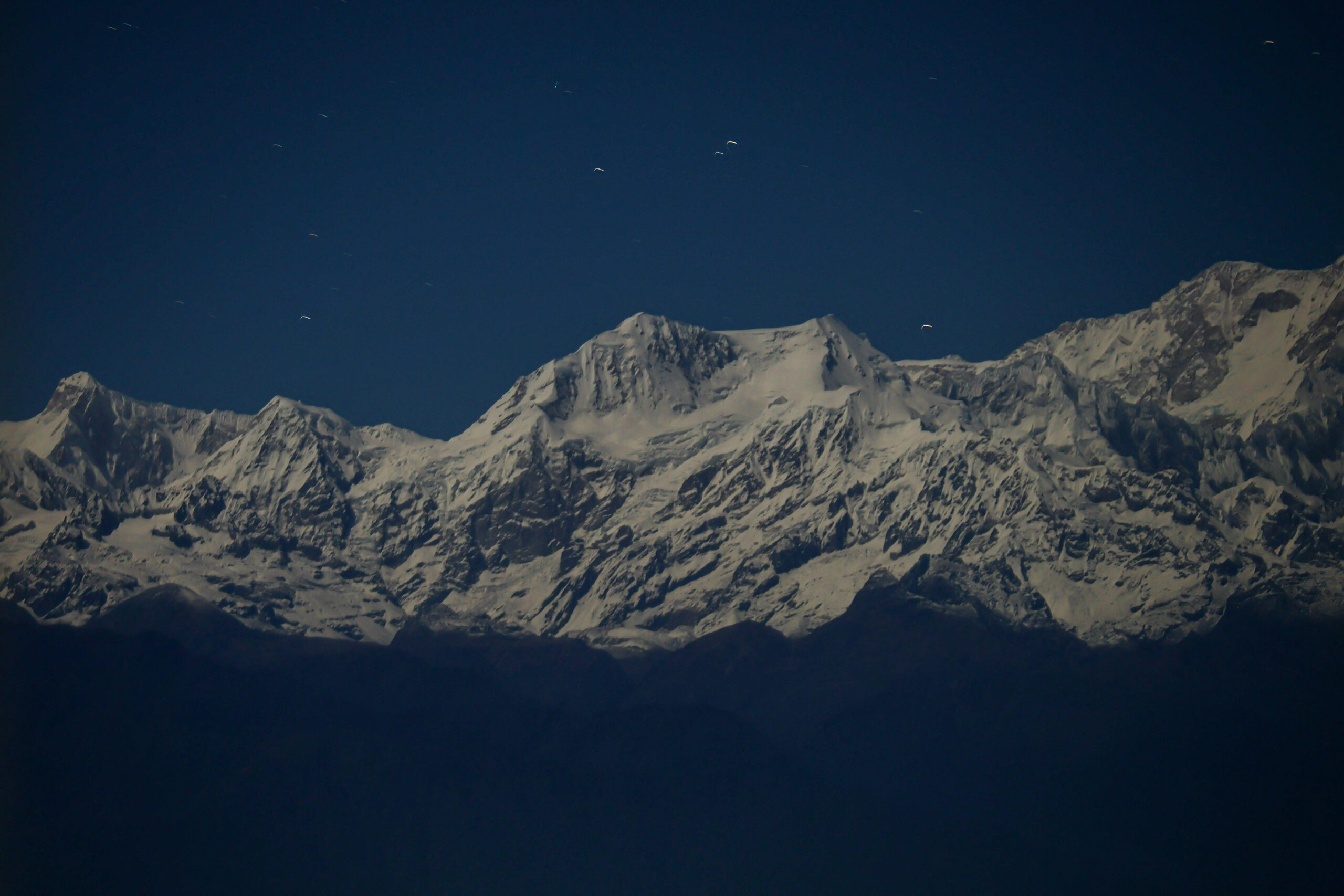 Kanchanjunga in moon light / Photo : Sudip Chanda
The beauty of the moonlit peak is inseparable from the night sky above it. In the clear, high-altitude air, the mountain stands beneath a canopy of stars that seem uncountable.On a night near the full moon, the scene is often dramatic, with the mountain dominating the foreground. On a darker night, the Milky Way can arc directly over the sacred summit, creating a mystical union between the world of rock and snow, and the vastness of the cosmos. The mountain, a treasure of the Earth, appears to be floating in a river of light.
The Best Time for the VisionTo catch this spectacular sight, one needs two primary conditions to align:
Clear Skies: The post-monsoon months of October, November, and early December and the spring months of March and April offer the highest probability of cloudless nights, essential for an unobstructed view.
A Bright Moon: The sight is at its most dazzling in the days surrounding the Full Moon, when the moonlight is powerful enough to make the peaks truly shimmer.
Kanchanjunga by moonlight is more than a beautiful view; it is a spiritual encounter—a momentary glimpse into a world of pure, sculpted light, felt deeply in the heart of the Himalayas.