




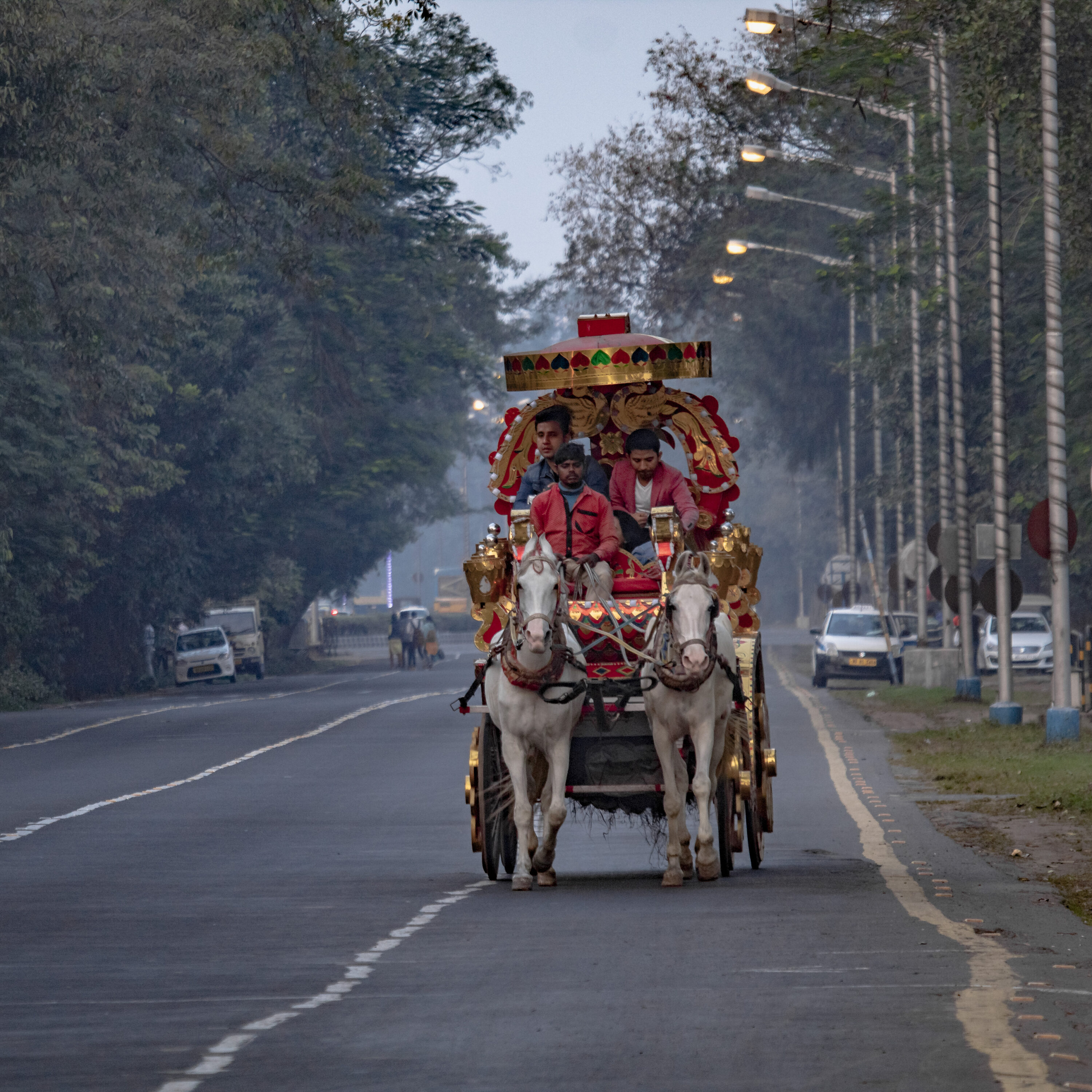
The Bengal News, Kolkata, January’2026 : For over a century, the rhythmic “clip-clop” of horse-drawn carriages around the Victoria Memorial has been as much a part of the city’s identity as its yellow taxis and slow-moving trams. But as 2026 begins, this colonial-era relic is facing a perfect storm of legal pressure, animal rights activism, and a city-wide push for modernization. Once a symbol of Victorian elegance, the Baggis of Kolkata are increasingly being viewed through a lens of concern rather than charm.
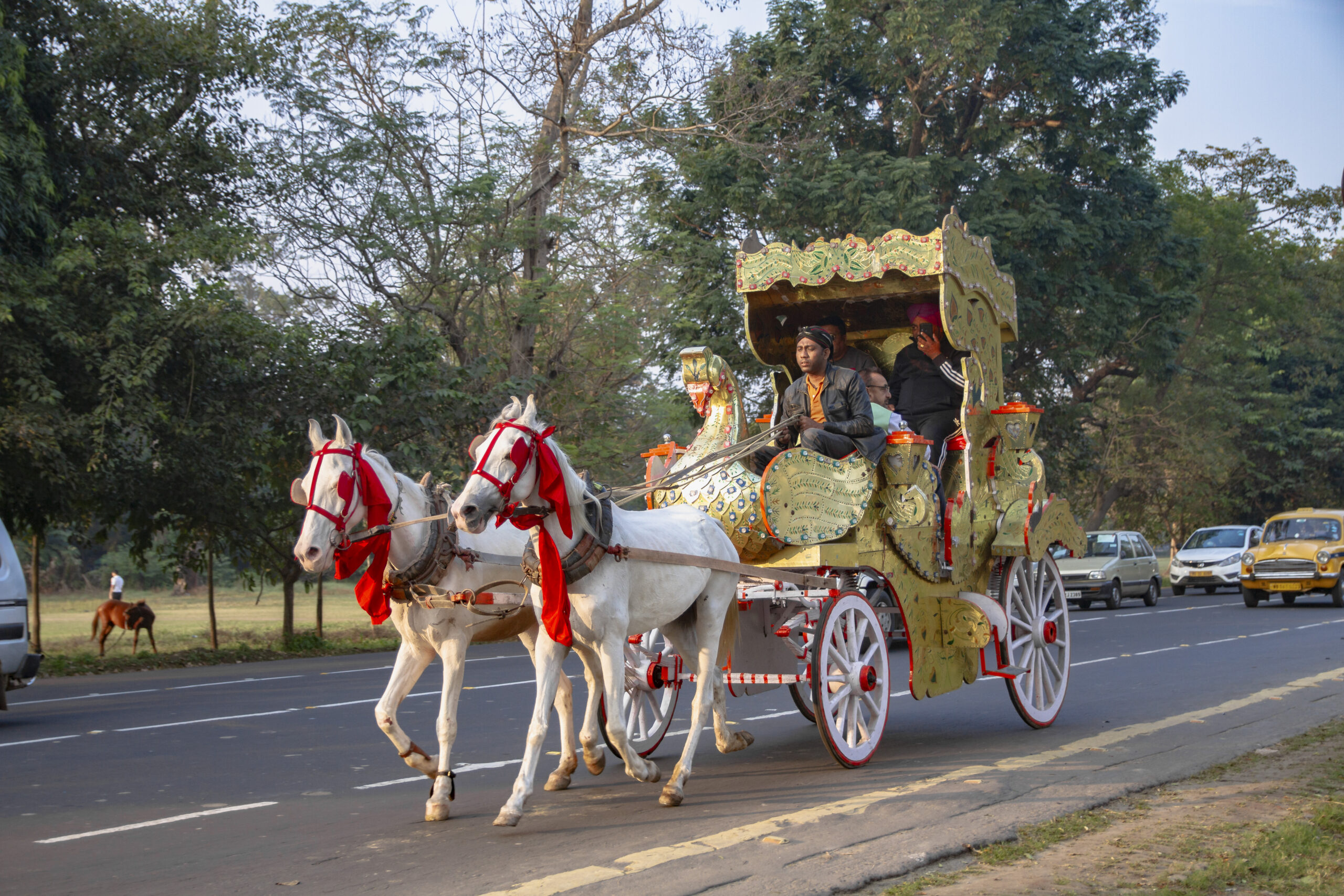 Kolkata’s Iconic Horse Carriages / Photo : Sudip Chanda
The debate reached a fever pitch following a series of distressing incidents in late 2025. In one widely circulated video, an emaciated horse collapsed from heatstroke on the Maidan, only to be beaten by its handler in an attempt to make it stand.
Animal welfare organizations, including PETA India and the CAPE Foundation, have released harrowing data showing that the situation for these animals has reached a “state of crisis.”
Abandonment: As horses become too old or sick to work, many are simply tethered in unhygienic conditions or abandoned on the streets.
Malnutrition: Surveys conducted in 2025 revealed that nearly all carriage horses in the city are “thin” or “very thin,” with blood tests showing chronic anemia.
Infrastructure Stress: The shift from soft soil to hard asphalt roads has led to irreversible joint and hoof damage for the animals.
The Calcutta High Court has taken a stern stance on the issue. Building on directives from 2024 and 2025, the court has ordered the West Bengal government to finalize a comprehensive rehabilitation plan. The mandate is clear: the city must transition away from animal-drawn transport while ensuring that the livelihoods of the Ghowsi (carriage drivers) are protected. Authorities have already begun cracking down on unlicensed carriages, and police presence around the Victoria Memorial has intensified to monitor the health of the animals on duty.
Looking toward the future, Kolkata is poised to follow the “Mumbai Model.” In Mumbai, horse-drawn Victorias were successfully replaced by battery-operated, vintage-style electric carriages.
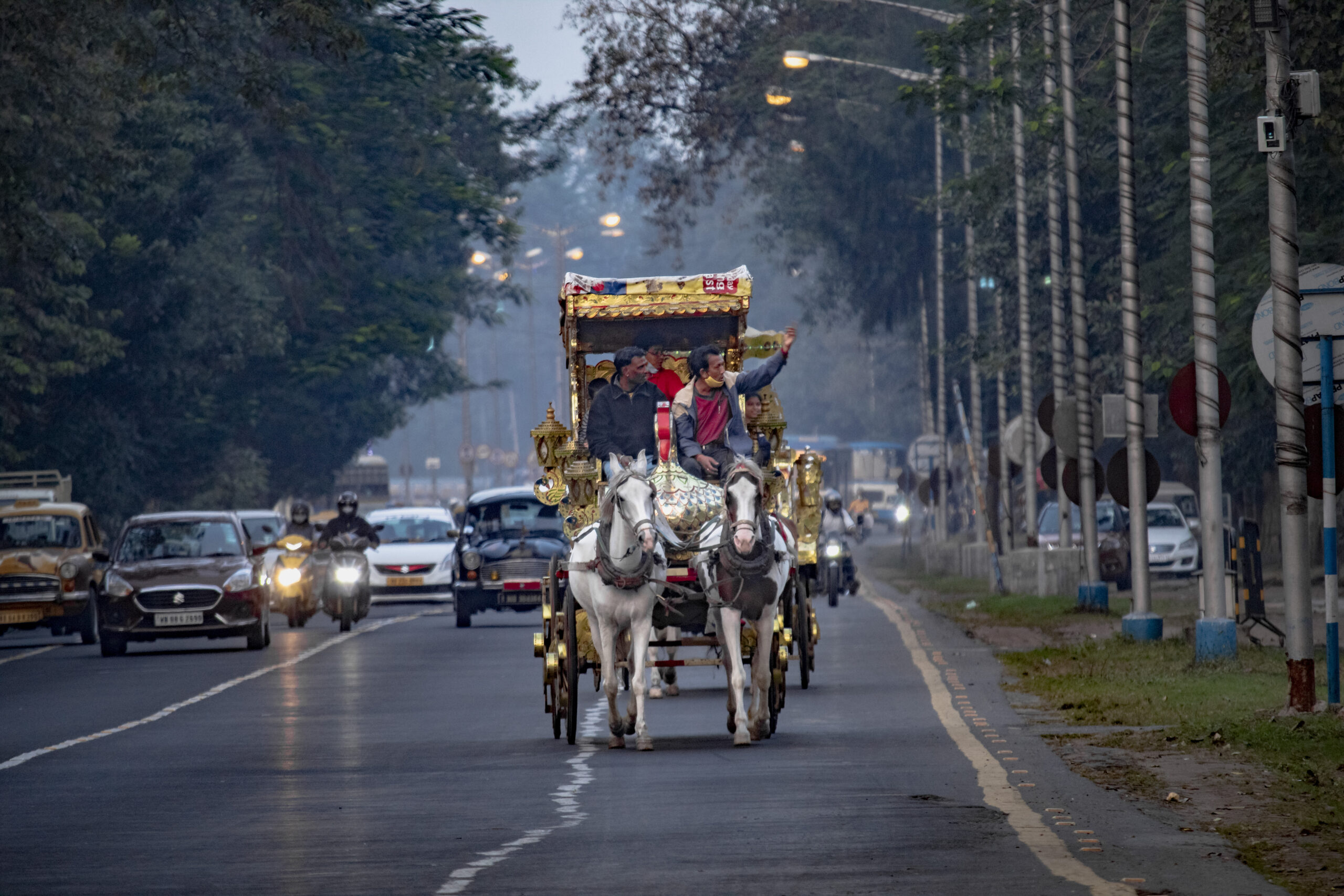 Baggis of Kolkata / Photo : Sudip Chanda
Local startups and EV manufacturers in West Bengal have already begun prototyping “e-carriages” designed to maintain the aesthetic appeal of the British era without the biological cost. These vehicles offer:
- Zero Emissions: Aligning with Kolkata’s 2026 “Green Fleet” initiative.
- Sustainable Income: Lower maintenance costs for drivers compared to the high price of feeding and medicating a horse.
- Tourist Appeal: Quiet, safe, and available for evening rides without the ethical baggage.
While traditionalists argue that removing the horses erases a piece of the city’s soul, the momentum for change seems unstoppable. For the carriage drivers, the transition is a matter of survival; for the horses, it is a matter of life and death.
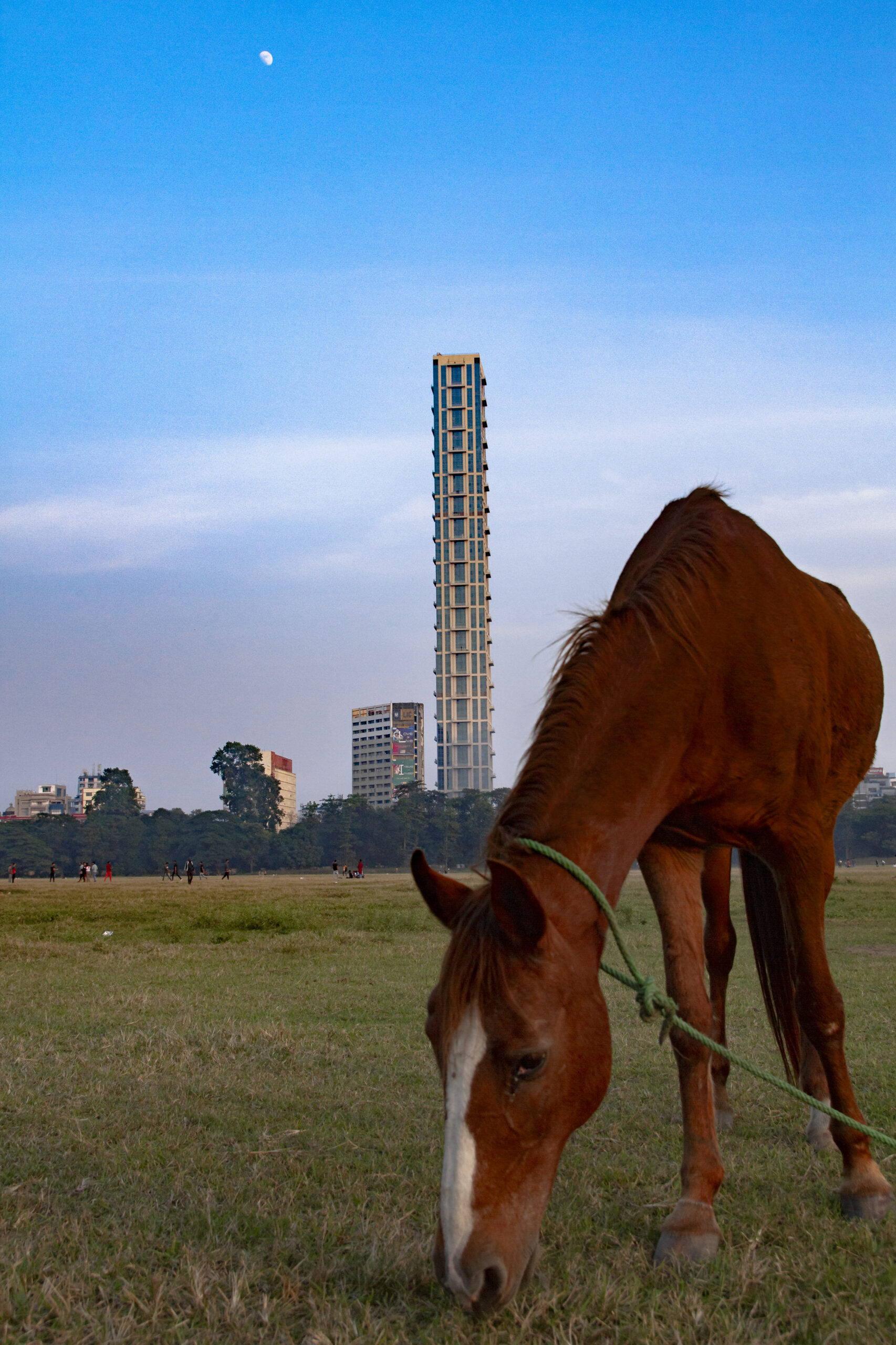 Matter of survival for the horses / Photo : Sudip Chanda
As the sun sets over the white marble of the Victoria Memorial this evening, the few remaining carriages still offer rides to nostalgic tourists. But with the government’s rehabilitation policy expected to be fully implemented by the end of the year, these may well be the final laps for Kolkata’s legendary horses.





Excellent