


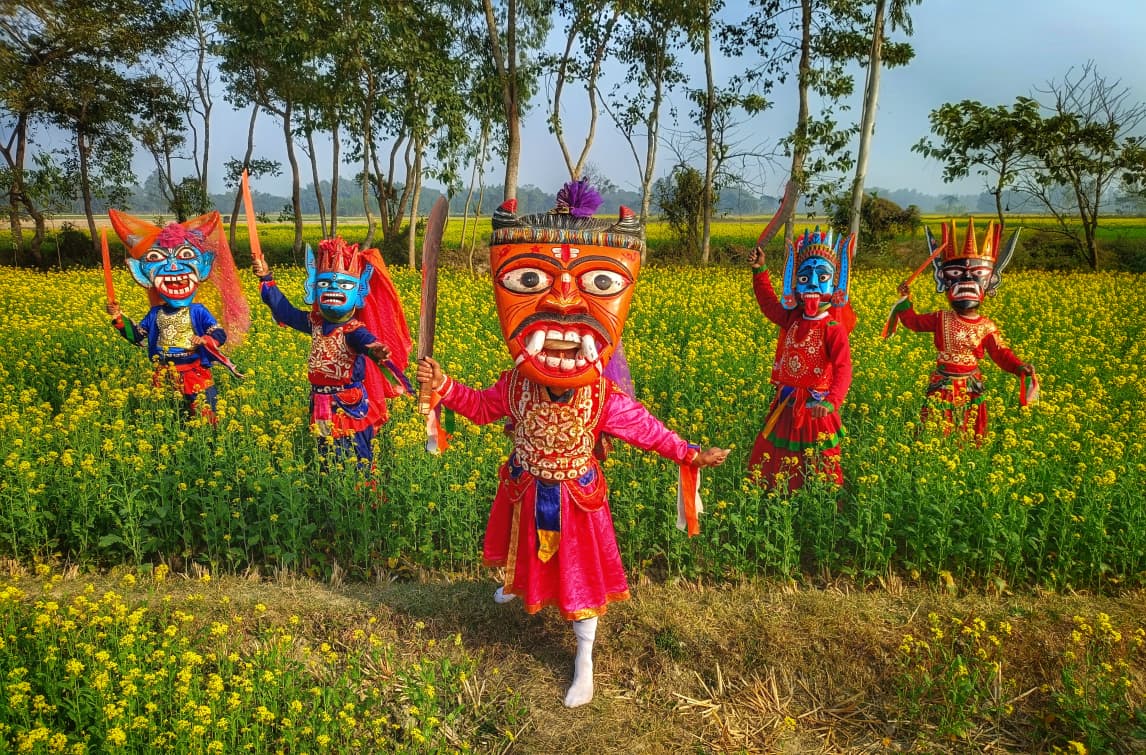
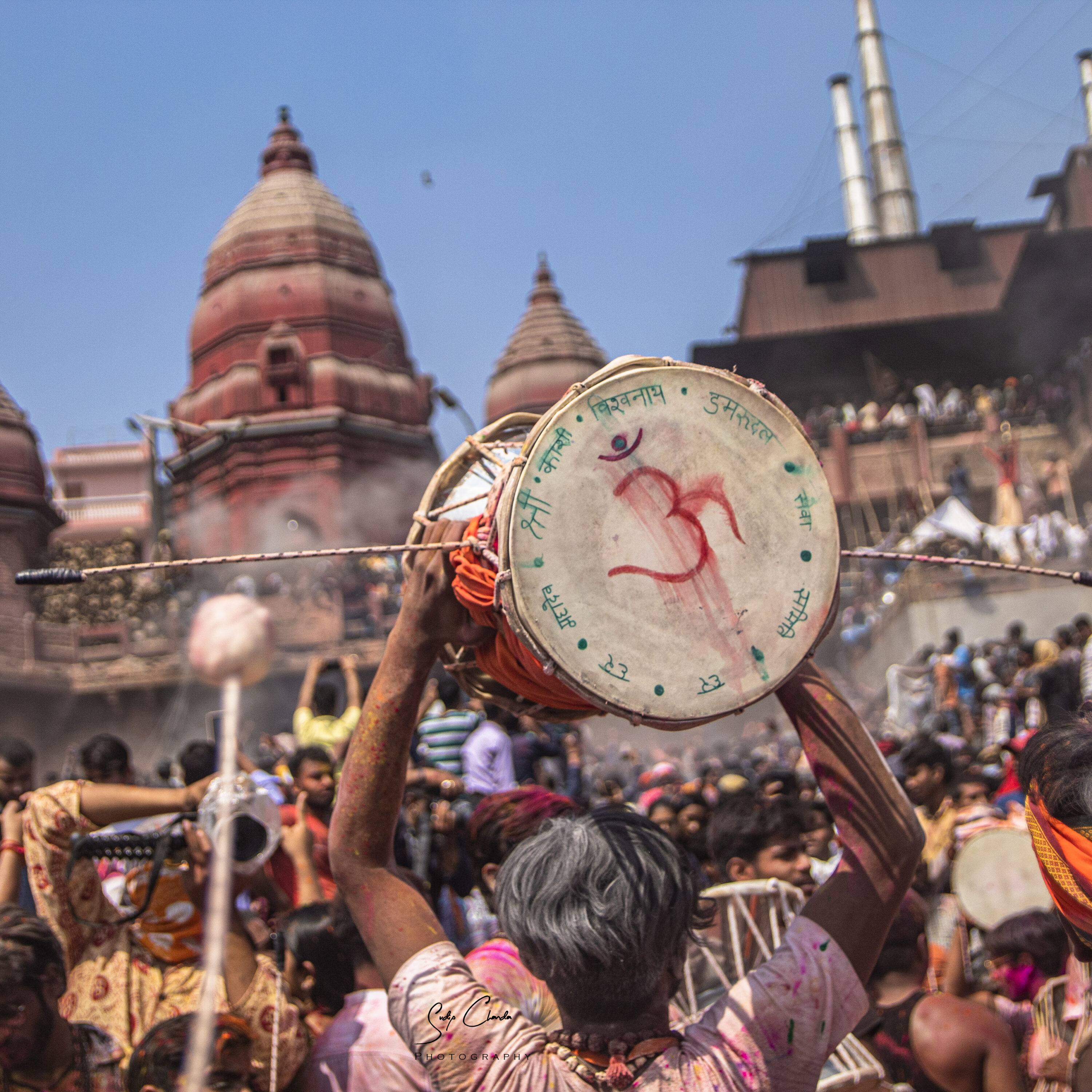
Rajarshi Ganguly, The Bengal News, West Bengal, January 18, 2026 — As the winter sun sets over the rural landscapes of Kushmandi and Mahishbathan, the rhythmic, heavy thumping of the Dhak (traditional drum) begins to echo through the fields. It marks the arrival of the Gomira dance, a centuries-old masked ritual that remains the spiritual heartbeat of the Rajbongshi and Polia communities of North Bengal.
 Gomira Ritual Revives North Bengal Traditions / Photo : Rajarshi Ganguly
What was once a localized village ceremony has recently caught the national spotlight, with the Sri Sri Gouranga Gomira Nach Gosthi from South Dinajpur performing to a capacity crowd at Kolkata’s Victoria Memorial Hall late last year to mark World Heritage Week. Derived from the colloquial term Gram-Chandi (the village deity), Gomira is more than a performance; it is a spiritual negotiation with the divine. Performed traditionally between the months of Chaitra and Ashad (mid-April to July), the dance is a plea for a bountiful harvest and protection from “evil forces.” “The masks aren’t just wood; they are vessels,” explains a local Debangshi (priest). Before a dancer dons a mask, a ritualistic puja is performed to “awaken” the character. The performance is famously non-vocal – there are no songs or dialogues – only the raw energy of the dancers who often enter a state of Bhor (trance), believed to be a state of possession by the deity.
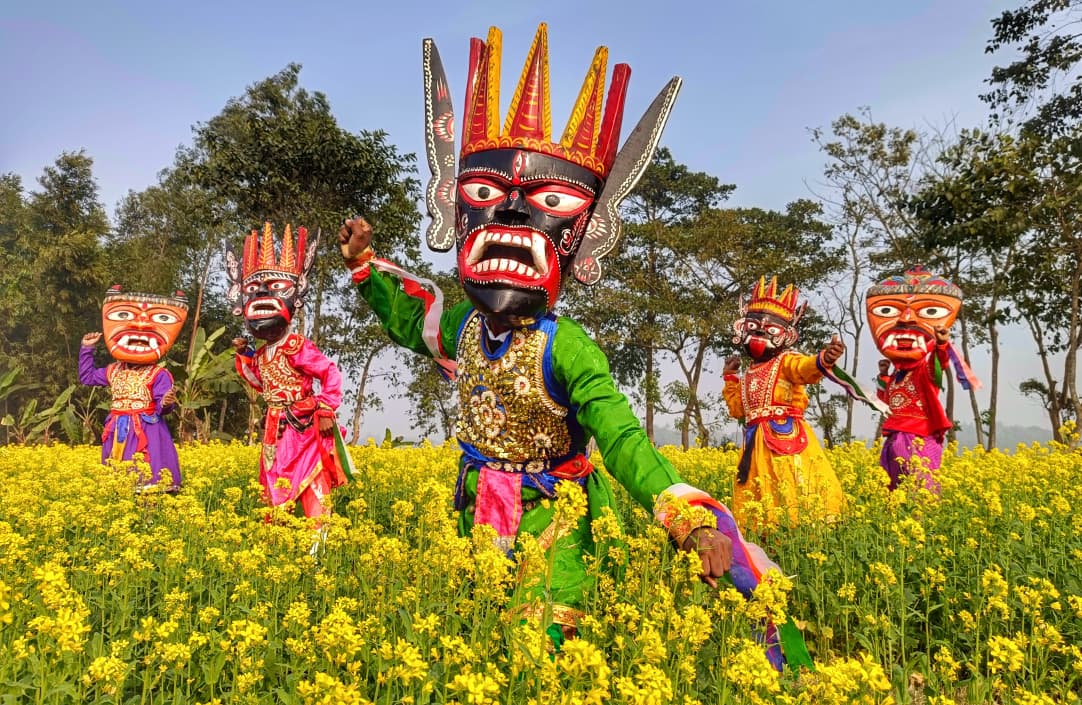
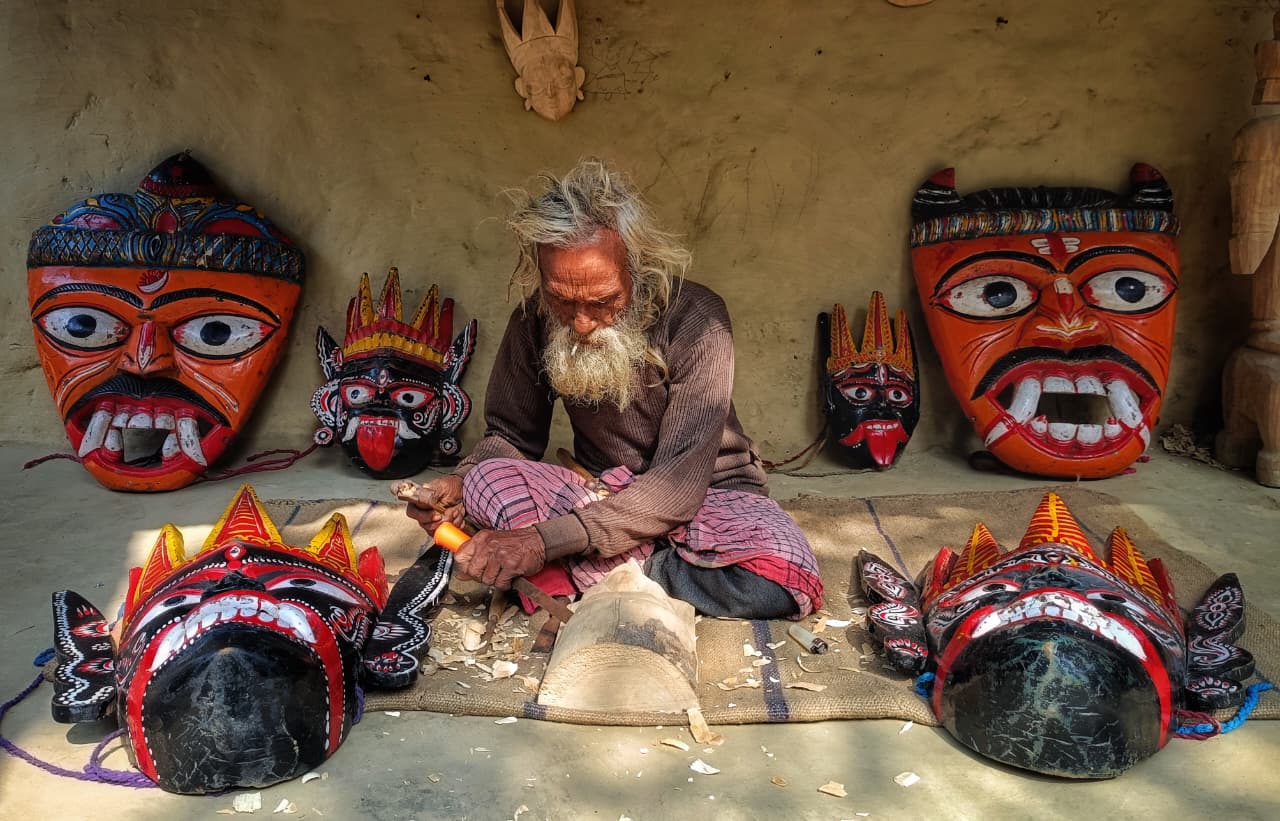 Gomira Ritual Revives North Bengal Traditions / Photo : Rajarshi Ganguly
The iconic wooden masks, which received a Geographical Indication (GI) tag in 2018, are the primary attraction of this ritual. Hand-carved from a single block of Gamar or Neem wood, these masks weigh between 2 to 3 kilograms and feature a fierce, bold iconography.
The character repertoire is vast:
Animal Spirits: Masks of tigers and birds that represent the animistic roots of the ritual.
Bura-Buri: The elderly couple representing Shiva and Parvati, who traditionally open the dance.
Narasimha: The half-man, half-lion avatar of Vishnu, whose high-tempo dance serves as the climax.
Chamunda & Smashan Kali: Fierce manifestations of the goddess Shakti.
While the ritual remains strictly a male domain—with men playing even the female roles—the craft of mask-making is seeing a shift. Recent workshops funded by grants like the Art for Hope 2025 have begun upskilling local carpenters to preserve the traditional aesthetics, which were briefly threatened by commercial mass production.
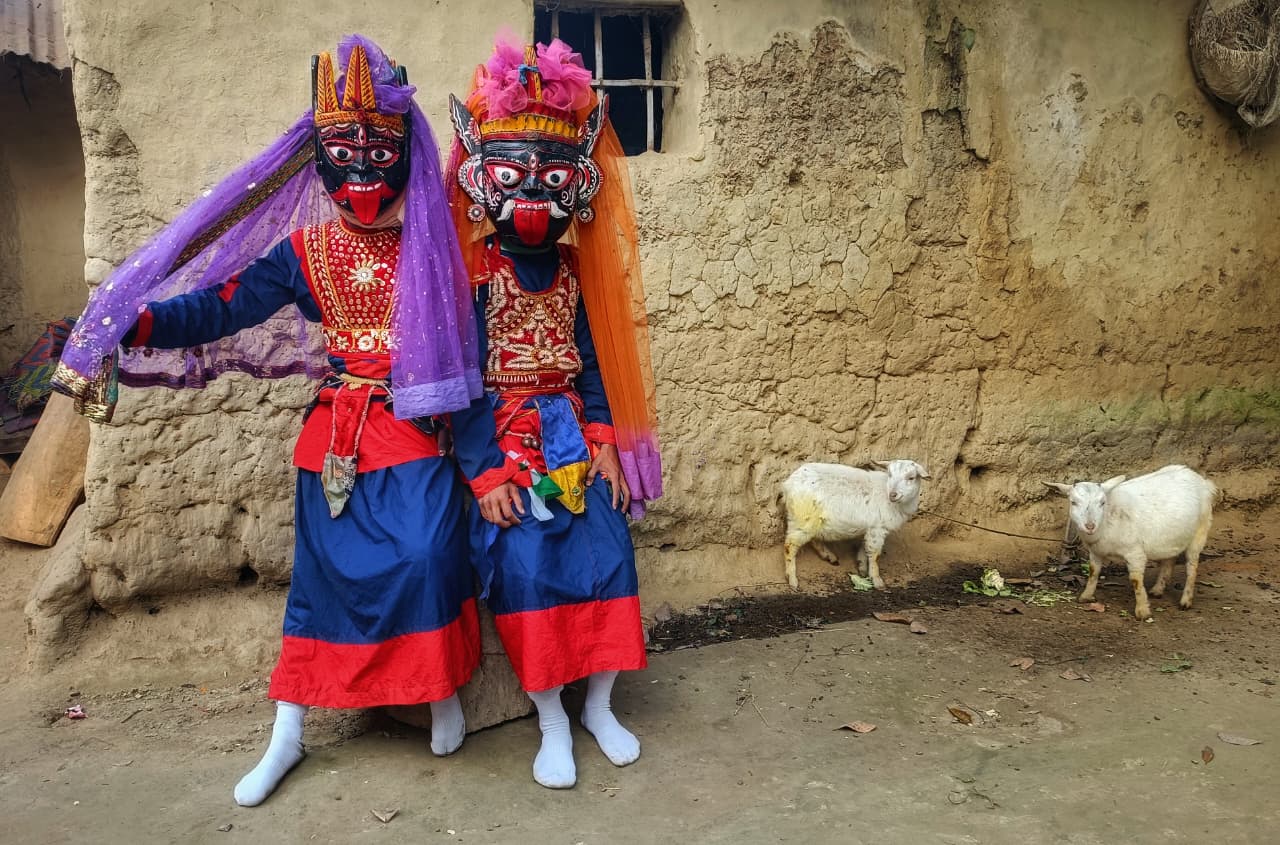 Gomira Ritual Revives North Bengal Traditions / Photo : Rajarshi Ganguly
Today, Kushmandi has transformed into a “craft hub,” where the masks are no longer just ritual objects but sought-after pieces of art for global collectors. However, for the villagers of Dakshin Dinajpur, the true value of the Gomira remains in the Gomira-tola (the sacred performance ground), where for a few hours every year, the line between the human and the divine completely disappears.



Excellent