


Rajarshi Ganguly, The. Bengal News, West Bengal, India: The ancient town of Santipur in West Bengal has once again been draped in the hues of devotion and artistry as the centuries-old Rash Yatra festival commenced, drawing thousands of devotees and tourists. Starting on the auspicious day of Kartik Purnima (which fell on November 5th this year), the festival celebrates the divine love of Lord Krishna and Radha, showcasing a unique blend of tradition and spectacular visual grandeur.
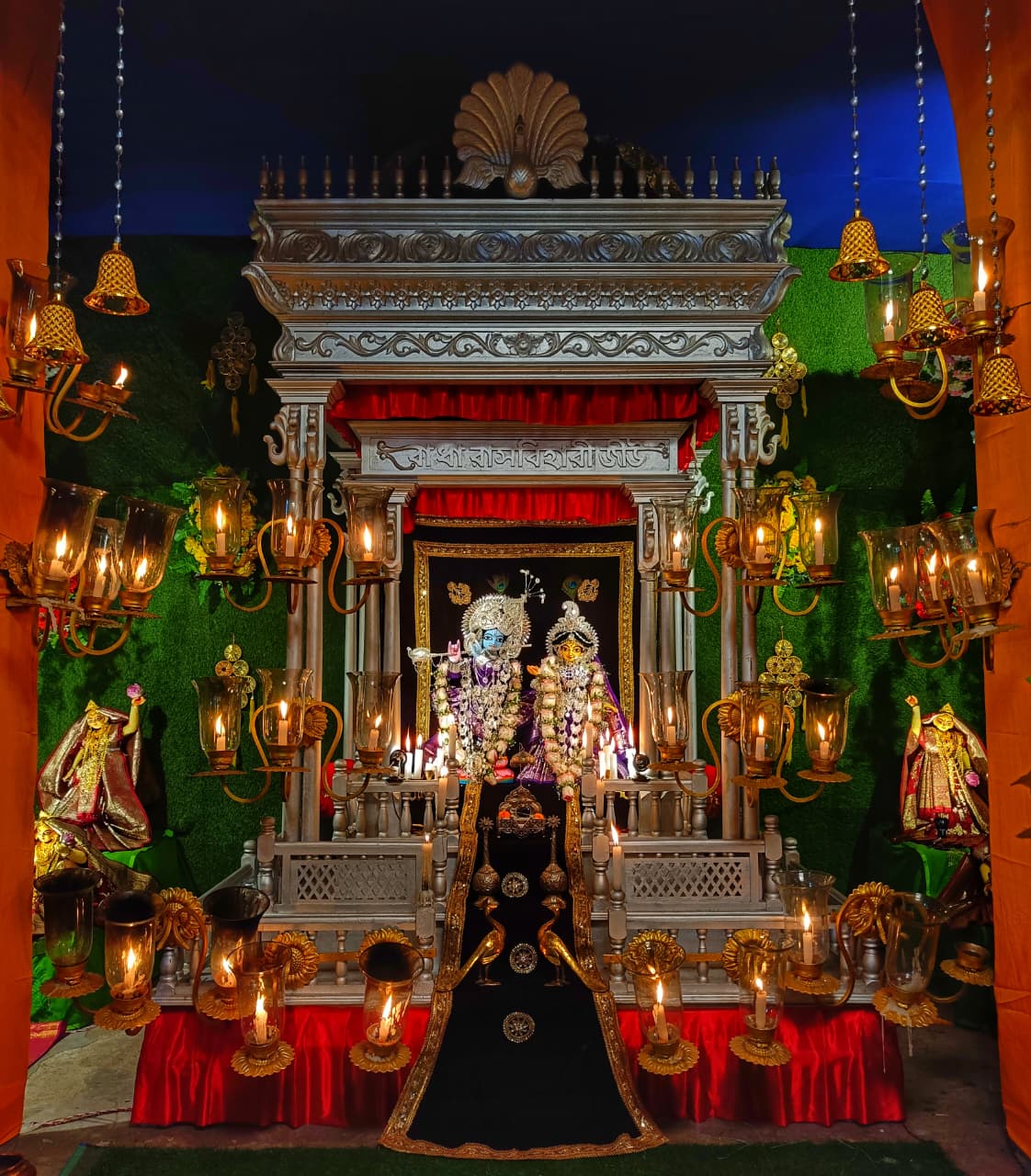
 Santipur Radiates Divine Glow as Historic Rash Yatra Begins/ Photo: Rajarshi Ganguly
The Rash Yatra in Santipur is not just a festival; it’s a profound cultural institution, believed to have been initiated approximately 450 to 500 years ago by Advaita Acharya, one of the principal disciples of Chaitanya Mahaprabhu. The main attraction is the worship of the Jugal Murti (combined idol) of Radha and Krishna, a tradition that began after the recovery of a stolen Radha idol, leading to the decision by Advaita Acharya’s grandson, Mathuresh Goswami, to worship the deities together. A major highlight is the magnificent idol of ‘Rairaja’ (the King of Radha), which is a key part of the famed ‘Bhanga Rash’ (the breaking of the Rash) carnival.
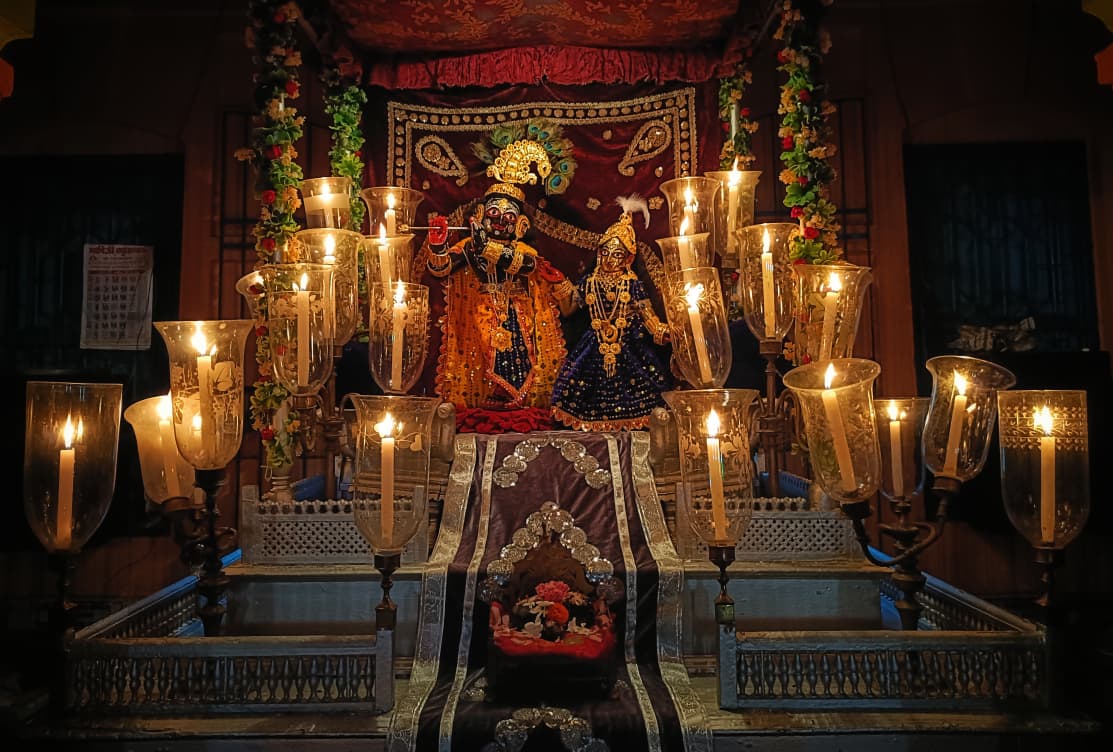
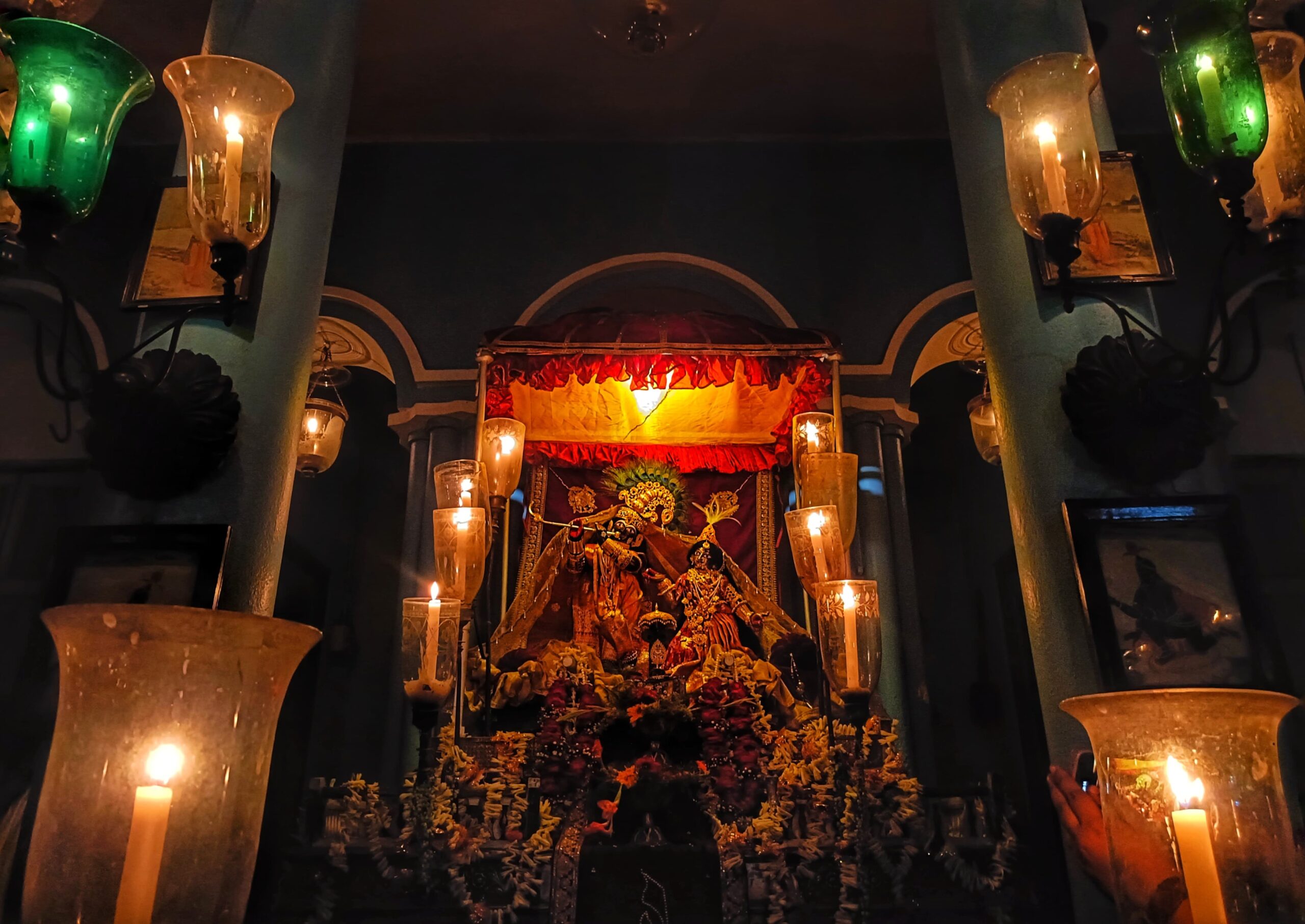 Santipur Radiates Divine Glow as Historic Rash Yatra Begins/ Photo: Rajarshi Ganguly
What truly sets Santipur’s Rash Yatra apart is its unique approach to illumination. In a beautiful nod to tradition, many of the old Goswami Baris (ancestral houses/temples) and Barowari (community) pandals eschew modern electric lighting. “The interiors of the oldest temples, like the Baro Goswami Bari and Din Dayal Bigraha Bari, are instead decorated with intricate Belgian glass lanterns (Fanush). Lit by candles, these centuries-old lamps, some 200 to 350 years old, cast a mesmerizing, soft glow, creating an almost ethereal atmosphere,” noted a local historian.
The Grand Finale: Bhanga Rash:
The celebrations, which include continuous bhajans, kirtans, and communal bhog (offering) distribution, culminate in the Bhanga Rash procession a few days after the Purnima. This “breaking” of the Rash sees a grand, riotous procession where the idols are carried to the river for a ceremonial immersion, symbolizing the joyous conclusion of the divine raas leela. This year, the massive crowds witnessing the spectacle affirmed the festival’s continuing cultural relevance. With thousands participating in the festivities and the following month-long fair, Santipur’s Rash Yatra remains a major pilgrimage and cultural destination in Bengal, celebrated with undiminished fervour four centuries on.
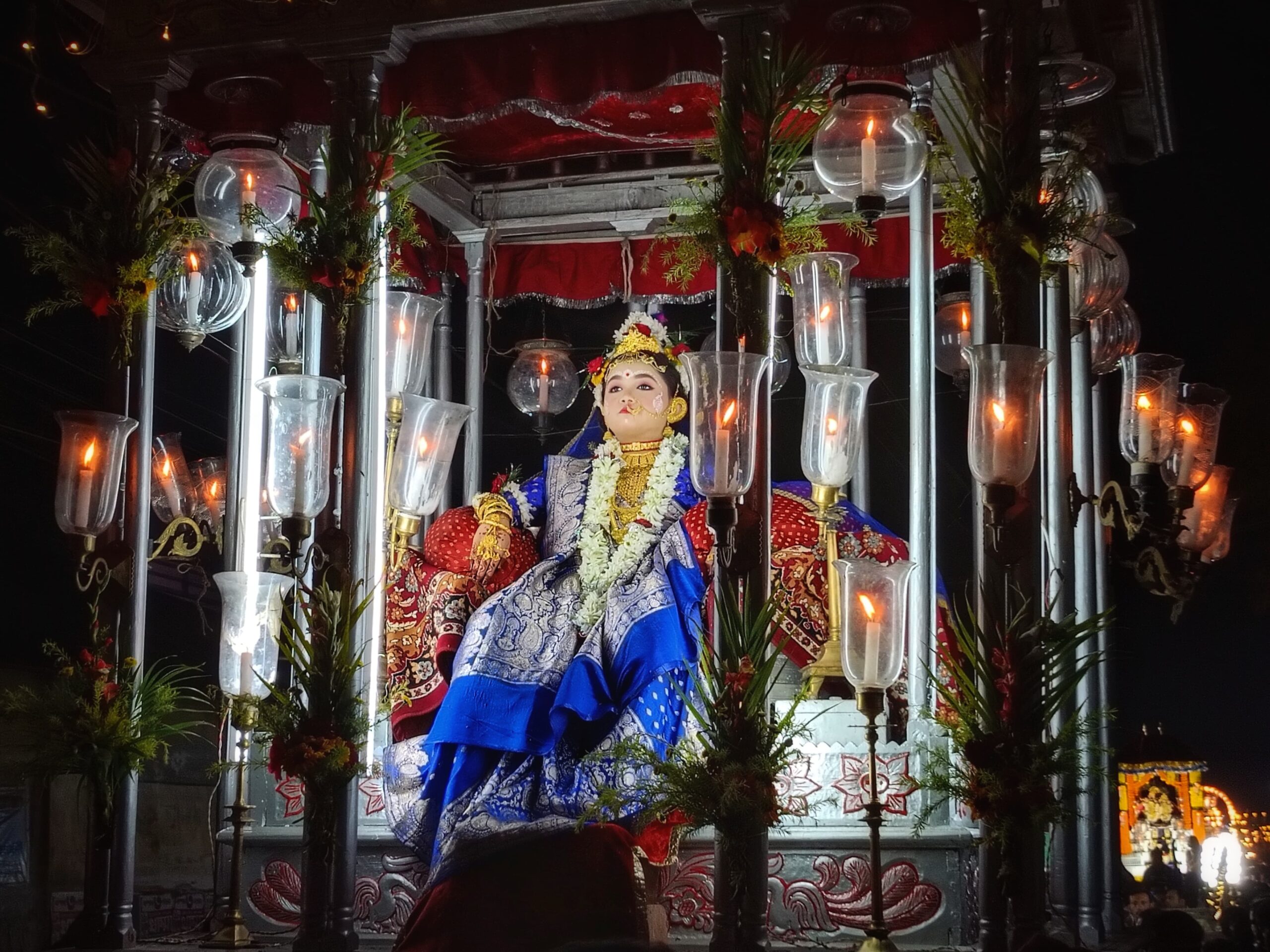 A young unmarried girl, beautifully dressed as Radha / Photo: Rajarshi Ganguly
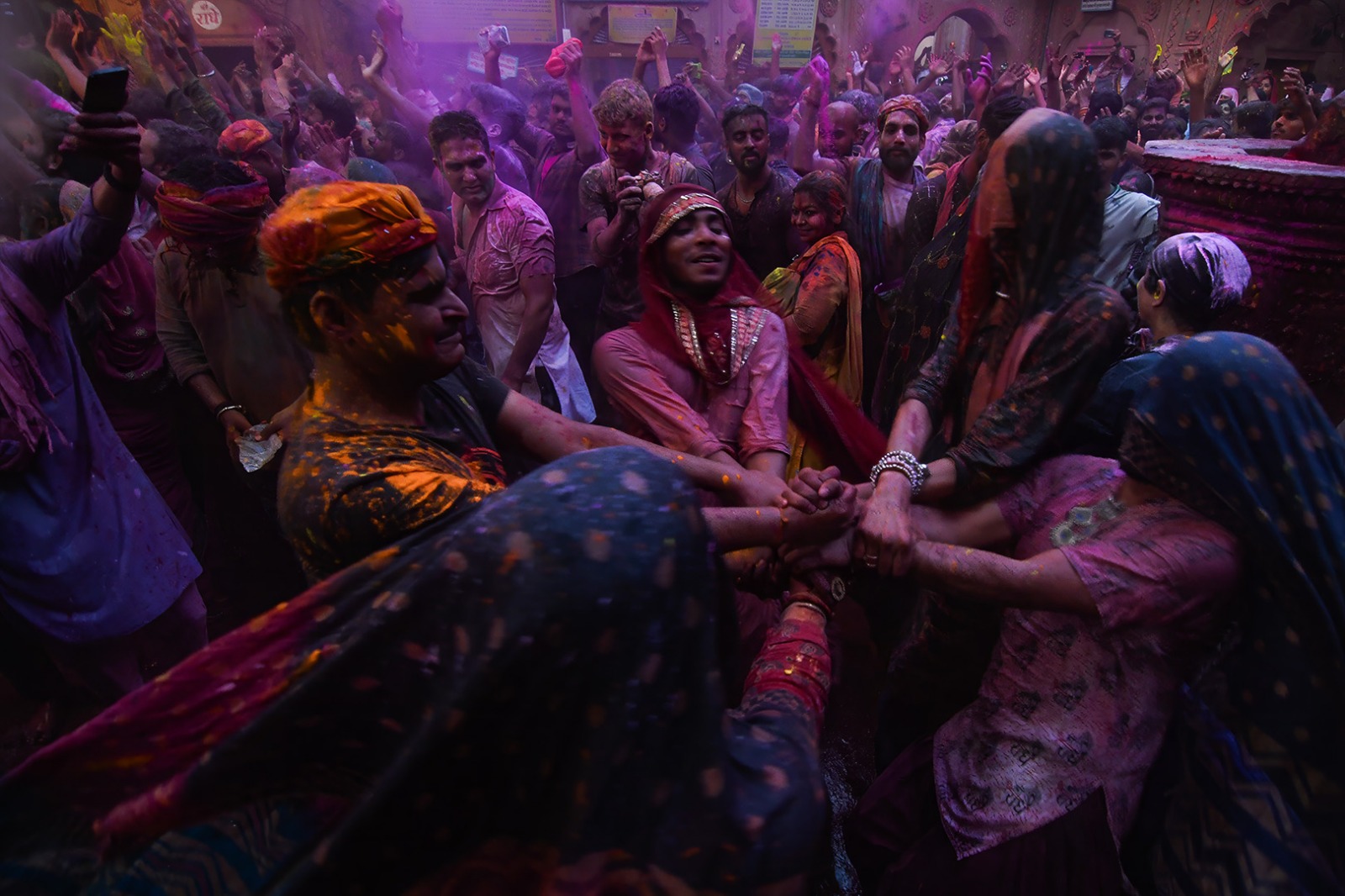
The term Kunja Bhanga literally translates to the “breaking” or dismantling of the bower. During the Rash festival, the idols of Radha and Krishna (Jugal Murti), along with other beloved deities, are moved from their main temples to specially decorated, elaborate temporary structures—the kunja—for the duration of the Raas Leela (divine dance). The Kunja Bhanga ceremony is the final act of the festival. The idols are tenderly carried back to their original temples, symbolizing the conclusion of Lord Krishna’s divine play and the return of the deities to their Nitya Seva (daily service) routine. This ritual is particularly significant as it often involves the “Thakur Nach” (dance of the deity), where the Goswami family members and devout followers carry the idols, dancing with them affectionately to bid a final, personal farewell. This emotional and intimate event draws a massive crowd of devotees who wish to catch a final glimpse of the Lord before the next year’s festival.
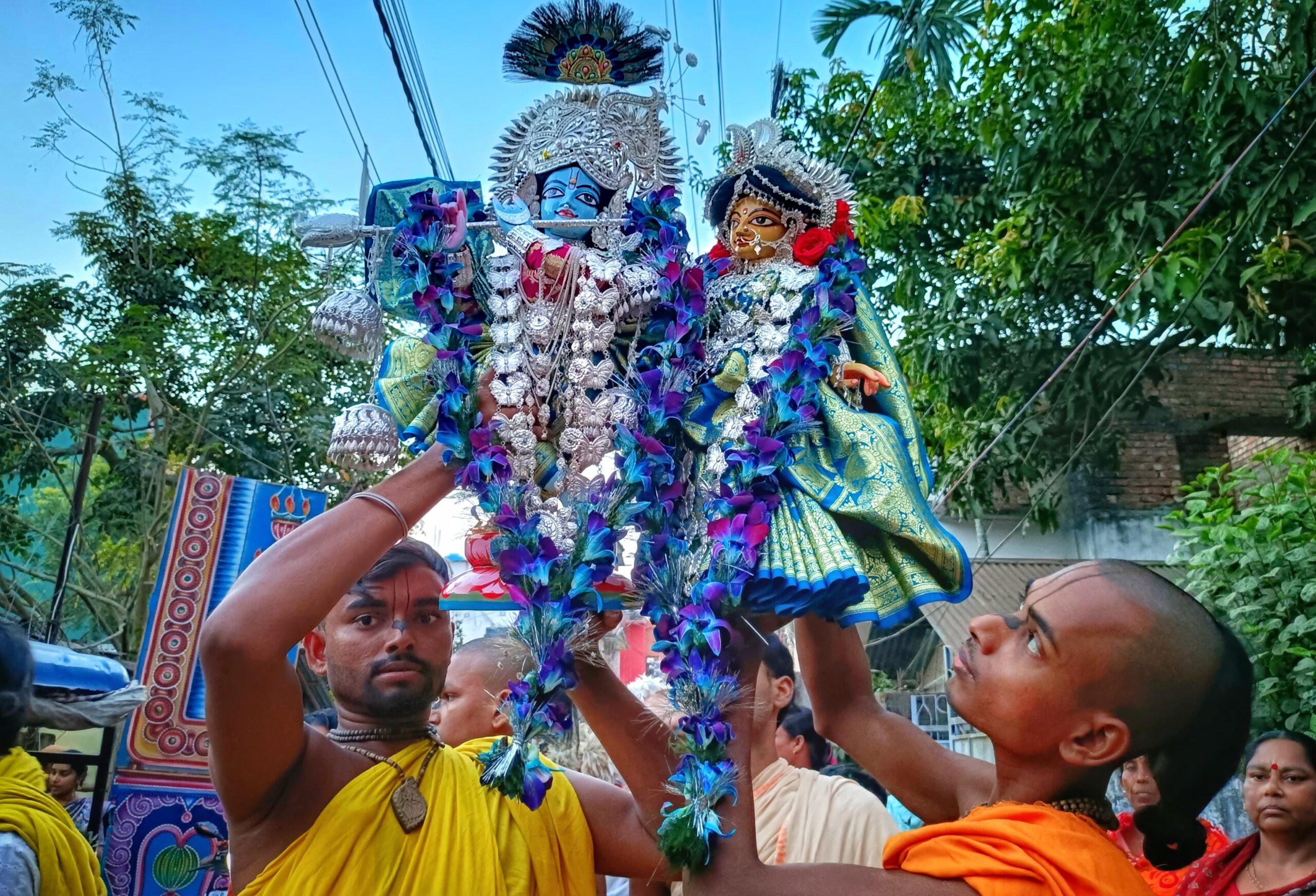 Kunja Bhanga ceremony, including the “Thakur Nach”, at the Radha Rashbihari Mandir / Photo: Rajarshi Ganguly
The Kunja Bhanga ceremony is celebrated with immense devotion, particularly in the historically significant Goswami Baris (ancestral temples) of Santipur, which were central to the festival’s foundation. The Boro Goswami Bari and other centuries-old houses witnessed their devotees participate in the ceremonial carrying of the deities, where the idols are sometimes carried to the devotees’ doorsteps for a close darshan, a rare opportunity for personal interaction with the Lord.
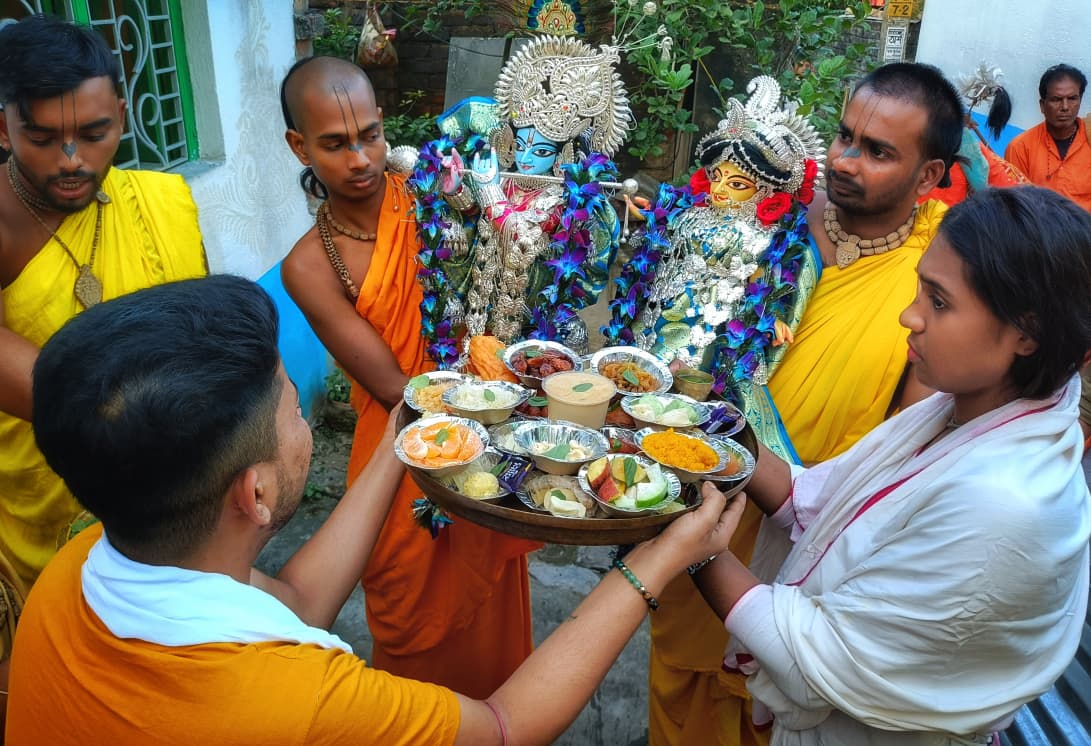 Kunja Bhanga ceremony, including the “Thakur Nach”, at the Radha Rashbihari Mandir / Photo: Rajarshi Ganguly
The successful conclusion of the Kunja Bhanga marks the end of Santipur’s most important religious event, which has upheld the town’s Vaishnava traditions for over four centuries. The town now awaits the following month-long Rash Mela (fair) to continue the festive spirit before returning to its quiet daily rhythm.


Shantipur, tucked in Nadia district, is basically a non‑stop stage for Bengal’s most colourful celebrations. Really loved it.
Thanks for your comments.
Be connected with us…