


Rajarshi Ganguly, Shantipur, West Bengal : In the renowned handloom hub of Shantipur, the vibrant soul of the famed Shantipuri Saree is not woven on the loom, but born in the dye vats. The process of yarn dyeing, where cotton and silk threads are meticulously coloured before weaving, stands as a critical and defining art form that ensures the legendary quality and unique aesthetic of these world-famous textiles.
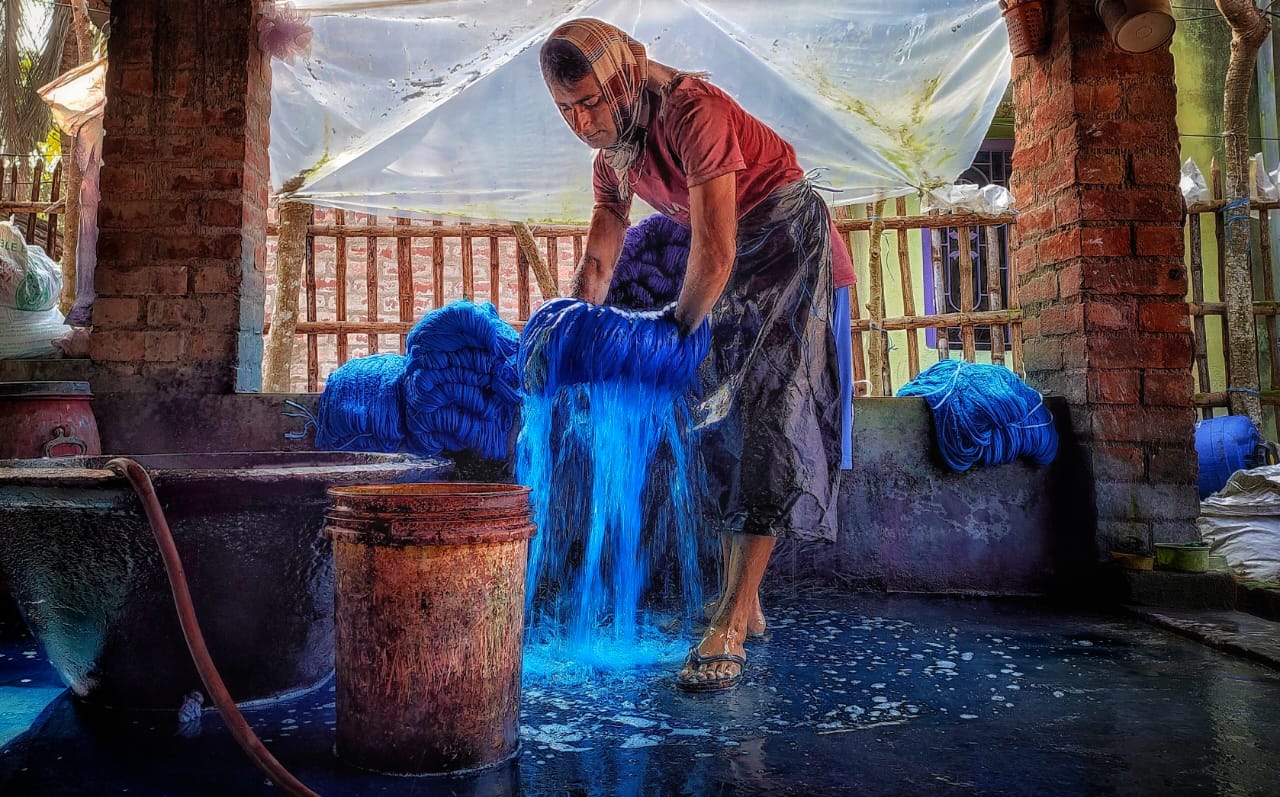 Yarn Dyeing at the Heart of Shantipur’s Handloom Saree Tradition / Photo : Rajarshi Ganguly
The elegance and vibrancy that characterize Shantipur’s sarees – such as the iconic, deep navy-blue Nilambari Saree – are a direct result of the complex pre-weaving dyeing process. Unlike many textile traditions where the cloth is dyed after weaving (piece dyeing), the practice here is to dye the yarn in hank form (a coiled loop of yarn) before it is warped and fitted onto the handloom.
- Ensuring Depth and Fastness: Yarn dyeing is paramount as it allows for a deeper penetration of colour into the individual fibres, leading to greater colour fastness and a richness of shade that is difficult to achieve otherwise. This is essential for the durability and lasting beauty of a handloom product.
- Design Complexity: Crucially, pre-dyed yarn enables the weavers to create intricate patterns, checks, and stripes in the body and border (paar) of the saree directly on the loom, using multiple coloured threads for the warp (lengthwise) and weft (crosswise) yarns. This weaving-in of colour is what gives the Shantipuri and related Tangail-Jamdani sarees their characteristic fine detailing.
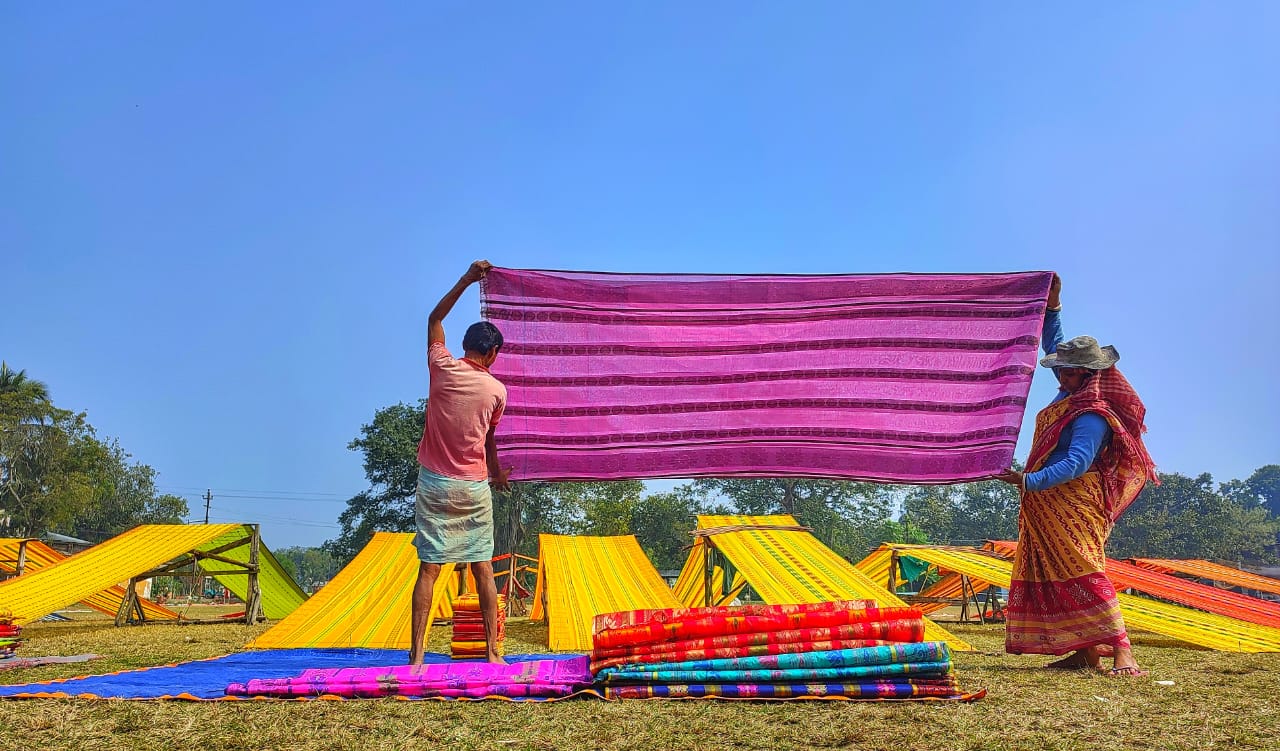 Yarn Dyeing at the Heart of Shantipur’s Handloom Saree Tradition / Photo : Rajarshi Ganguly
A specialized community of dyers operates the dedicated dyeing units in and around the Shantipur and Phulia clusters, bringing their technical knowledge of dyes, chemicals, and traditional methods to the table.
- Traditional vs. Modern: While the region historically used indigenous vegetable dyes (like indigo for the famous Neelambari), modern chemical dyes are now widely used to achieve a broader and more consistent spectrum of colours, catering to contemporary market demands.
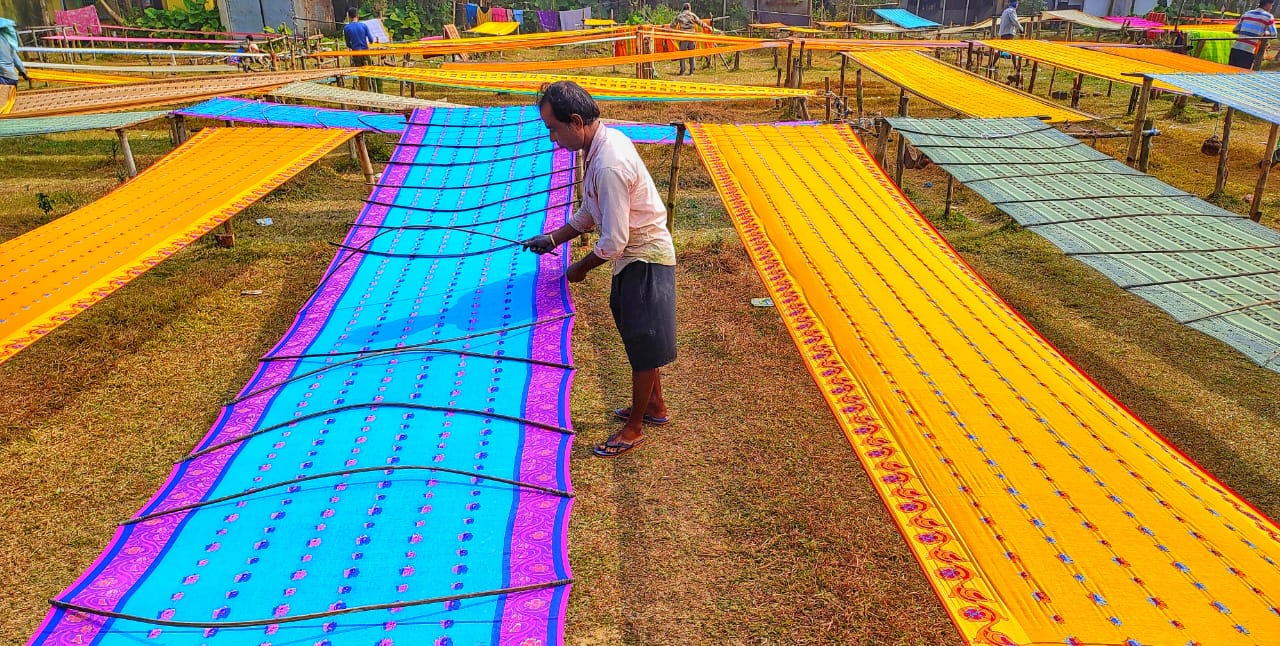
- The Process: The raw cotton or silk yarn, typically procured in hank form, is first bleached (if required) and then meticulously immersed in the dye vats. The dyed hanks are subsequently dried, often in the open air, before undergoing other pre-weaving steps like winding and sizing.
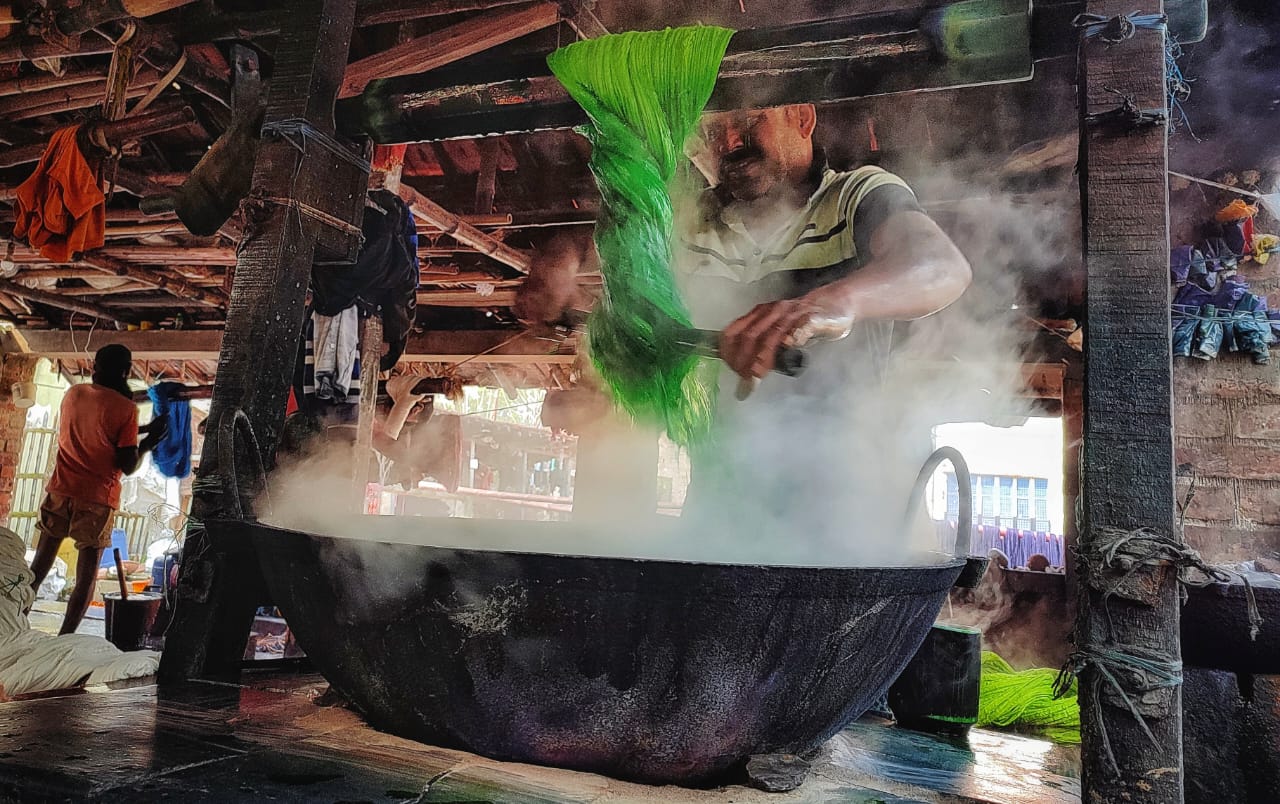 Techniques and the Role of the Dyers / Photo : Rajarshi Ganguly
Despite its critical role, the dyeing sub-industry faces several challenges, often shared by the entire handloom sector. Issues like the rising cost of quality dyes and raw materials, and competition from cheaper, mass-produced textile products, put pressure on the commercial viability of these artisanal processes.
Nevertheless, the yarn dyeing tradition remains one of the greatest strengths of the Shantipur handloom cluster, which has received the Geographical Indication (GI) Tag for its unique heritage. The quality of the dyeing directly contributes to the unique selling point of the Shantipur saree: its superfine texture, stunning colour combinations, and unmatched elegance. The meticulous process of dyeing each thread is a testament to the dedication of the artisans who continue to preserve this centuries-old craft, ensuring that the colours of Shantipur’s heritage continue to shine brightly.




Nice Article…
Thanks for your comments.
Be connected with us…
Good Story and colourful photos. Really loved it.
Thanks for your comments.
Be connected with us…