




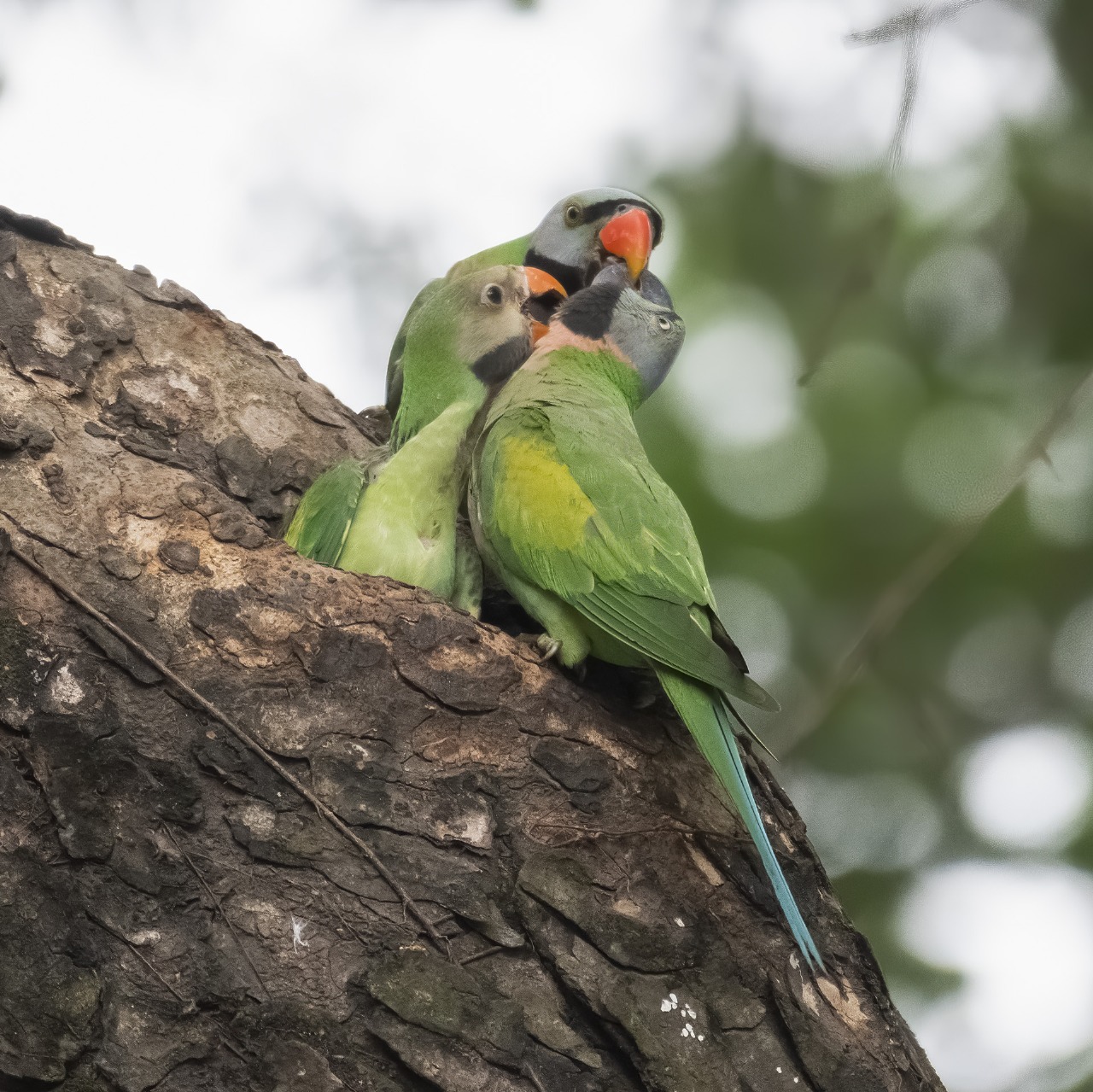
Santanu Bose, The Bengal News, West Bengal : With its dazzling plumage of green, grey, and a distinctive patch of salmon-pink on its chest, the Red-breasted Parakeet (Psittacula alexandri) stands out as one of the most widespread and visually striking parrot species across Southeast Asia and the Indian subcontinent. However, despite its wide distribution and adaptability—even thriving in major urban centers—this bird is currently listed as Near Threatened (NT) on the IUCN Red List, facing mounting pressure from habitat loss and the persistent threat of the illegal pet trade.
A Portrait in Pink and Green :
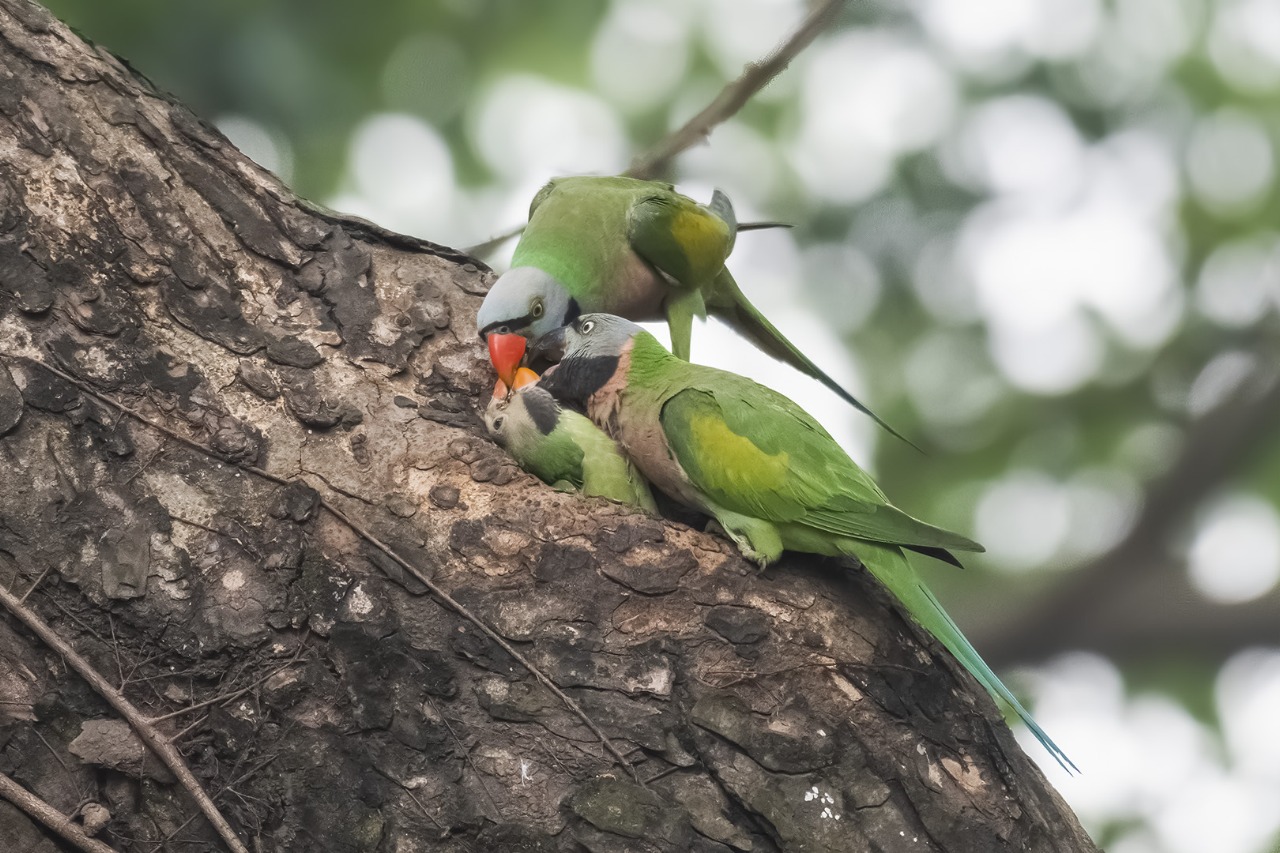 The Red-breasted Parakeet / Photo : Santanu Bose
Also known as the Moustached Parakeet, due to the thin black line that runs from its beak to its cheek, the Red-breasted Parakeet is instantly recognizable. The species is predominantly green, featuring a pale bluish-grey head and the defining red (or salmon-pink) patch extending from its throat down to its upper abdomen. Males typically have a red upper bill, while the female’s upper bill is black. The bird exhibits significant geographical variation, with eight recognized subspecies. These subspecies are scattered across a vast area, from the foothills of the Himalayas in northern India, through continental Southeast Asia, to numerous islands in Indonesia, including the Andaman Islands. They are highly adaptable, inhabiting moist deciduous forests, mangroves, coconut and teak plantations, and increasingly, parks and urban areas. Their diet is varied, consisting of nectar, flowers, seeds, fruits, and grains.
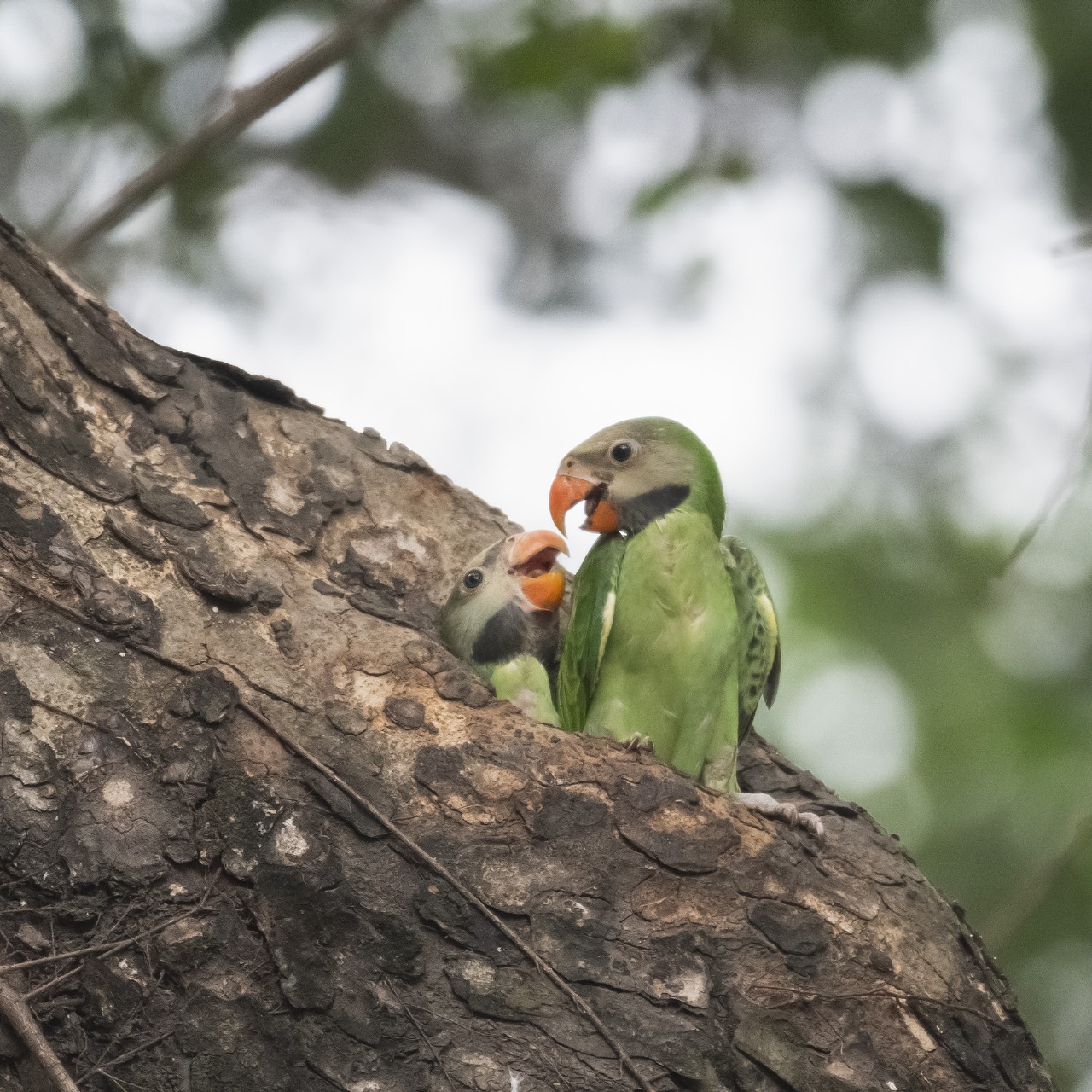 The Red-breasted Parakeet / Photo : Santanu Bose
The Urban Paradox and Conservation Concerns :
The Red-breasted Parakeet presents a conservation paradox: while its native populations are declining, it has managed to establish feral, or introduced, populations in major cities around the world, including Mumbai, Chennai, Bangalore, and Singapore. This adaptation demonstrates their resilience but also masks the deeper threats to the species’ overall health. Extensive deforestation and the selective logging of mature trees across its native range, particularly in places like Thailand and Laos, significantly reduce the availability of essential nesting sites (tree hollows and cavities). Despite protection laws in countries like India, the parakeet remains a sought-after species in the illegal pet trade, leading to unsustainable exploitation and the capture of wild individuals. This practice directly contributes to the decline of native populations and is the source of many of the feral populations now seen in cities.
Ornithologists stress that while urban sightings are a welcome sign of the bird’s hardiness, they should not distract from the need to enforce stricter conservation measures in its original forest habitats.